 SS
SS
Key Takeaways
- Almost nobody in HR, finance, operations or administration has a portfolio, which is exactly why one works.
- You do not need a website — a well-made PDF or a single page is enough.
- Confidentiality is manageable through generalisation and relative figures rather than a reason not to bother.
- Two short case studies of processes you improved is the whole thing.
- It differentiates most at the interview stage, where it gives you something concrete to walk through.
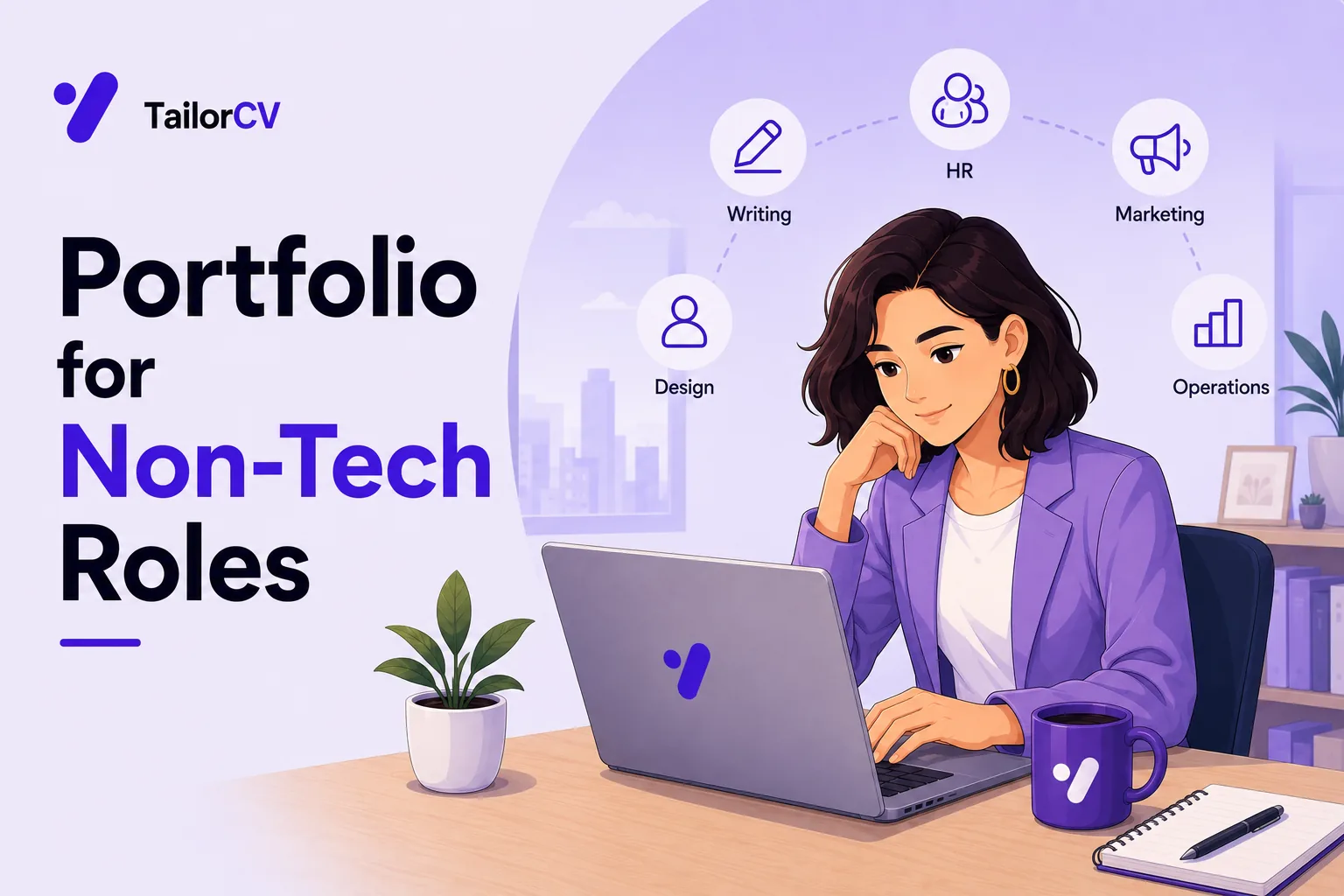
The advice to build a portfolio is aimed almost entirely at designers and developers, which leaves everyone else assuming it does not apply to them.
That assumption is the opportunity. In fields where nobody has one, a modest two-page document showing how you improved something makes you memorable in a way that a stronger resume alone does not.
This guide covers what to include when your work does not produce visual output.
Before anything, make sure the resume linking to it works — the free ATS score checker.
Why it works precisely because it is unusual
Everyone's resume looks similar in these fields. Same titles, same responsibilities, same vocabulary. A hiring manager reading twenty HR generalist resumes has very little to distinguish them.
A portfolio gives them something concrete. Not because the work is more impressive, but because you can show the shape of it rather than asserting it.
It is strongest at interview stage. When asked "tell me about a process you improved", having a documented example you can walk through — and leave behind — separates you from candidates describing something from memory.
What goes in one
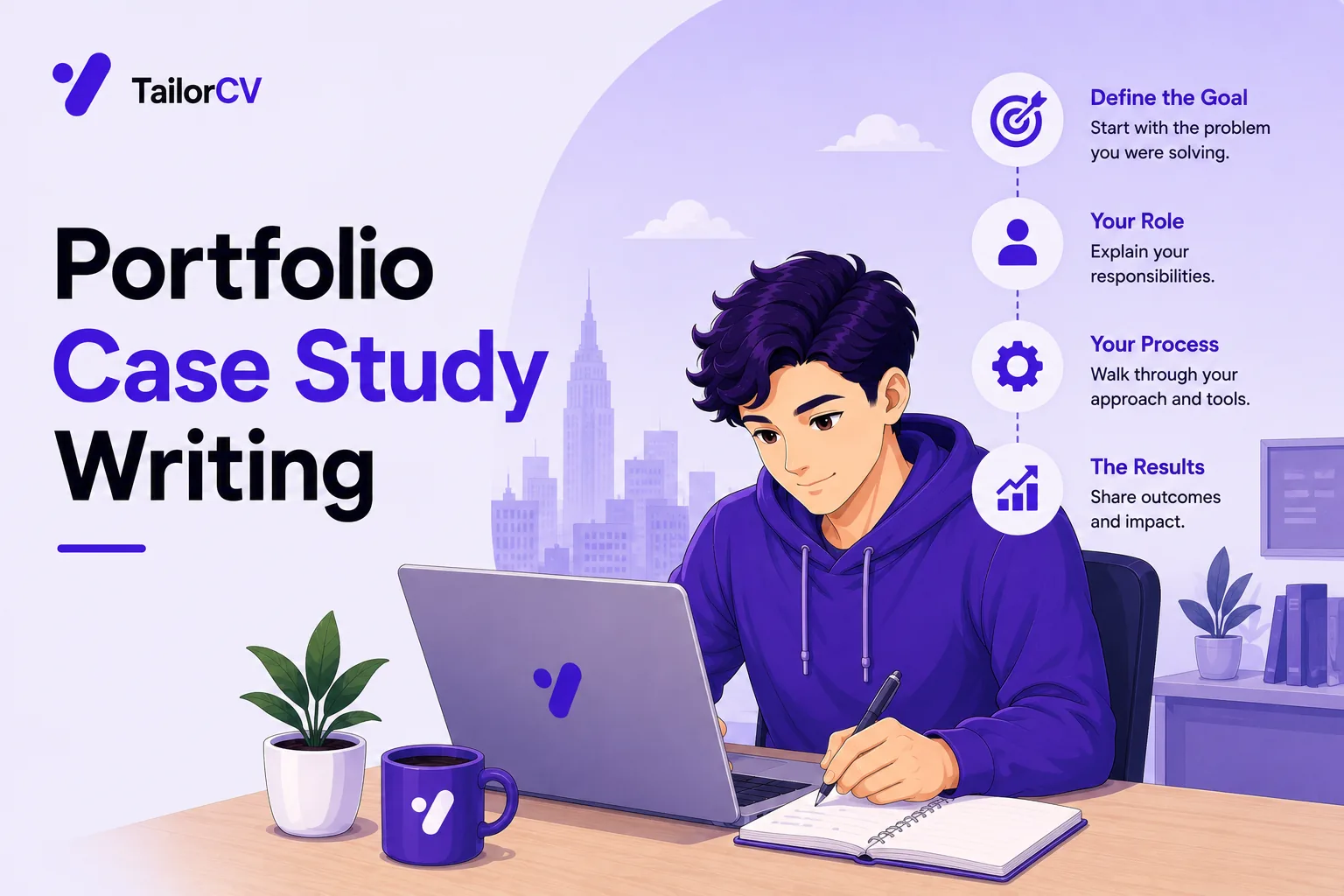
The structure is the same as any case study — problem, constraint, options, decision, outcome — applied to non-visual work. See portfolio case study writing.
HR and people operations
- An onboarding process you redesigned, with before-and-after time to productivity
- A recruitment funnel you improved, with conversion figures at each stage
- A policy you wrote and how you handled the consultation
- An engagement or retention initiative and what it moved
Finance and accounting
- A reporting process you automated, with the time saved
- A month-end close you shortened, with the day count before and after
- A reconciliation error rate you reduced
- A budgeting model you built and what decisions it informed
Operations and supply chain
- A workflow you redesigned, with throughput or error rates
- A vendor process you restructured
- An inventory or scheduling problem and how you solved it
Marketing
- A campaign with targeting, channels, tests and results
- Content that performed, with the traffic or conversion behind it
- A brand or messaging project and the reasoning
Project and programme management
- A project recovered from difficulty — what was wrong, what you changed
- A stakeholder conflict resolved
- A delivery process improved
Administration and customer operations
- A support process redesigned, with response times
- A knowledge base you built and its effect on repeat queries
What one page actually looks like
The abstraction is the hard part, so here is a complete example. This is one page of an HR portfolio, written by someone with two years of experience — not a director.
Cutting new-hire onboarding from 3 weeks to 8 days
The problem. New joiners were taking about three weeks to become independently productive. Managers were repeating the same explanations, and two people in six months resigned within their probation period, both citing feeling unsupported in their exit conversations.
The constraint. No budget for an onboarding platform, and I could not add work to managers who were already the bottleneck.
What I looked at first. I asked the last eight joiners what they had needed and could not find. Six of the eight named the same three things: who to ask about IT access, where the leave policy actually lived, and what their first month was supposed to look like.
What I considered. A formal buddy system, a written handbook, or a structured 30-day checklist owned by the joiner rather than the manager. The buddy system needed manager time I did not have. A handbook was what we already had, unread.
What I did. Built a 30-day checklist the new joiner owns, with three scheduled check-ins at day 3, day 10 and day 30. Wrote one page answering the three questions everyone asked. Moved IT access requests to the week before the start date rather than day one.
Outcome. Time to independent productivity dropped from about 3 weeks to 8 days across the next 11 hires. No probation-period resignations in the following year. Manager time on onboarding went down, not up.
What I would do differently. I should have asked the joiners before designing anything. I spent the first week building a handbook nobody wanted, because I assumed the problem was missing information rather than not knowing who to ask.
Look at what that page does. It names a real constraint, shows a decision between three options, has numbers on both sides of the change, and ends with an honest admission. None of it required a big budget or a senior title, and it took an afternoon to write.
Two of those pages is the entire portfolio.
Handling confidentiality
The objection most people raise, and it is manageable.
Generalise the employer. "A mid-size insurance company" rather than the name.
Use relative figures. "Reduced processing time 40%" rather than absolute volumes you should not disclose.
Describe the shape, not the specifics. The structure of a problem is rarely confidential even when the data is.
Never include customer information, internal financials, personnel data or anything under NDA.
Ask your employer. A sanitised write-up is frequently permitted, and asking is safer than assuming.
If you genuinely cannot use recent work, use something older, something from volunteering, or a personal project — a spreadsheet model you built for a community organisation still demonstrates the same thinking.
The format
You do not need a website. For non-technical roles a PDF is entirely acceptable and frequently better, because you can attach it or leave it behind after an interview.
Two to four pages. One case study per page or two.
Plain and readable. Headings, short paragraphs, a simple before-and-after table or chart where it helps. This is a document, not a design exercise.
If you prefer a page online, one simple page is enough — see portfolio hosting options.
Name it properly — Ananya_Sharma_Case_Studies.pdf.
Using it
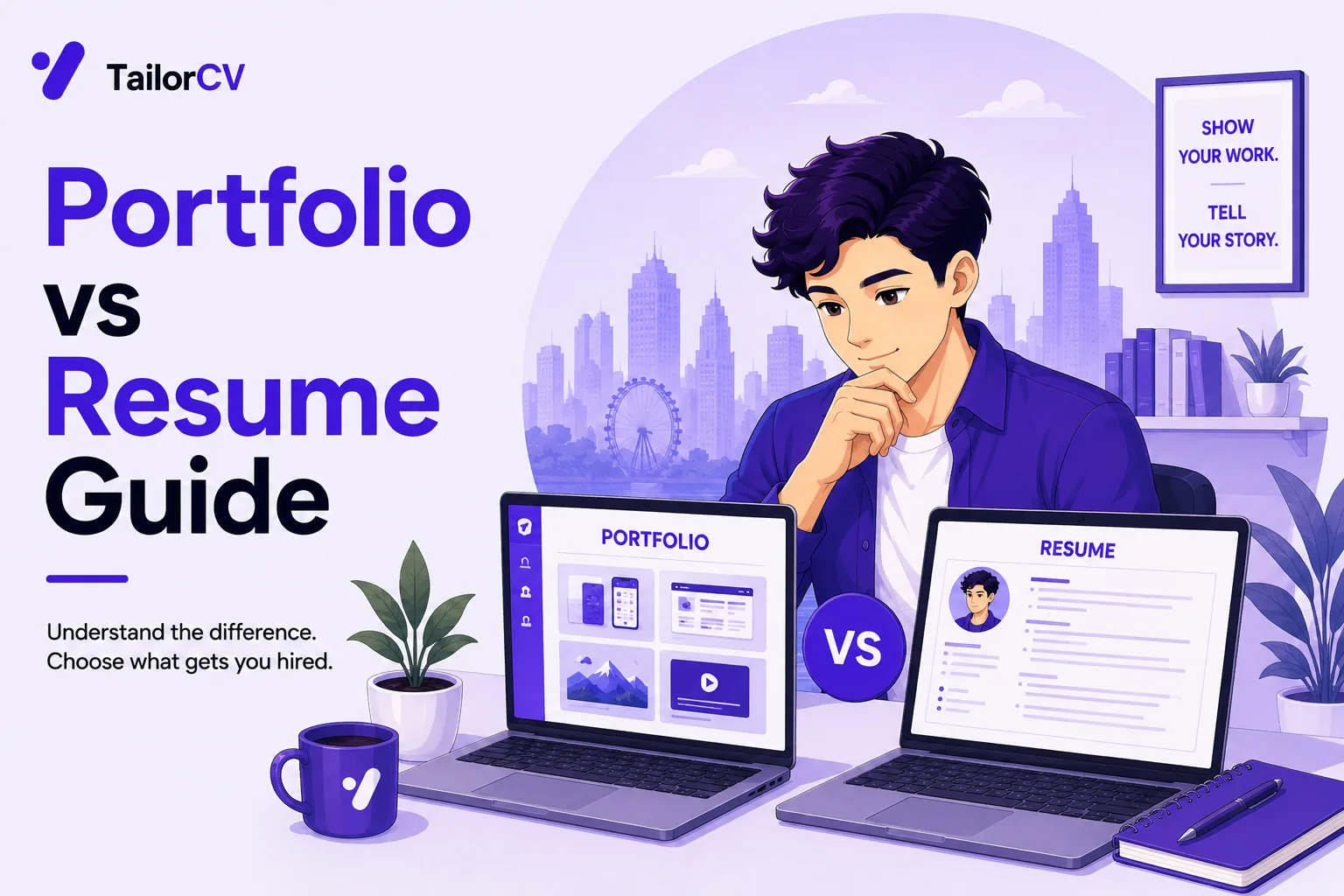
Do not attach it to applications by default. The resume is what gets screened, and unsolicited attachments add friction — see portfolio vs resume.
Link it on your resume if it is online, on the contact line.
Bring it to interviews. When asked about a process you improved, you have a documented example rather than a recollection — and offering to leave it behind is memorable.
Send it as a follow-up. After an interview where a relevant topic came up: "You asked about onboarding — I've attached the write-up of the redesign I mentioned."
Mention it in a cover letter where one is expected.
Print one copy if you are interviewing in person. Handing over a page at the moment the question is asked is a different experience from promising to send something later.
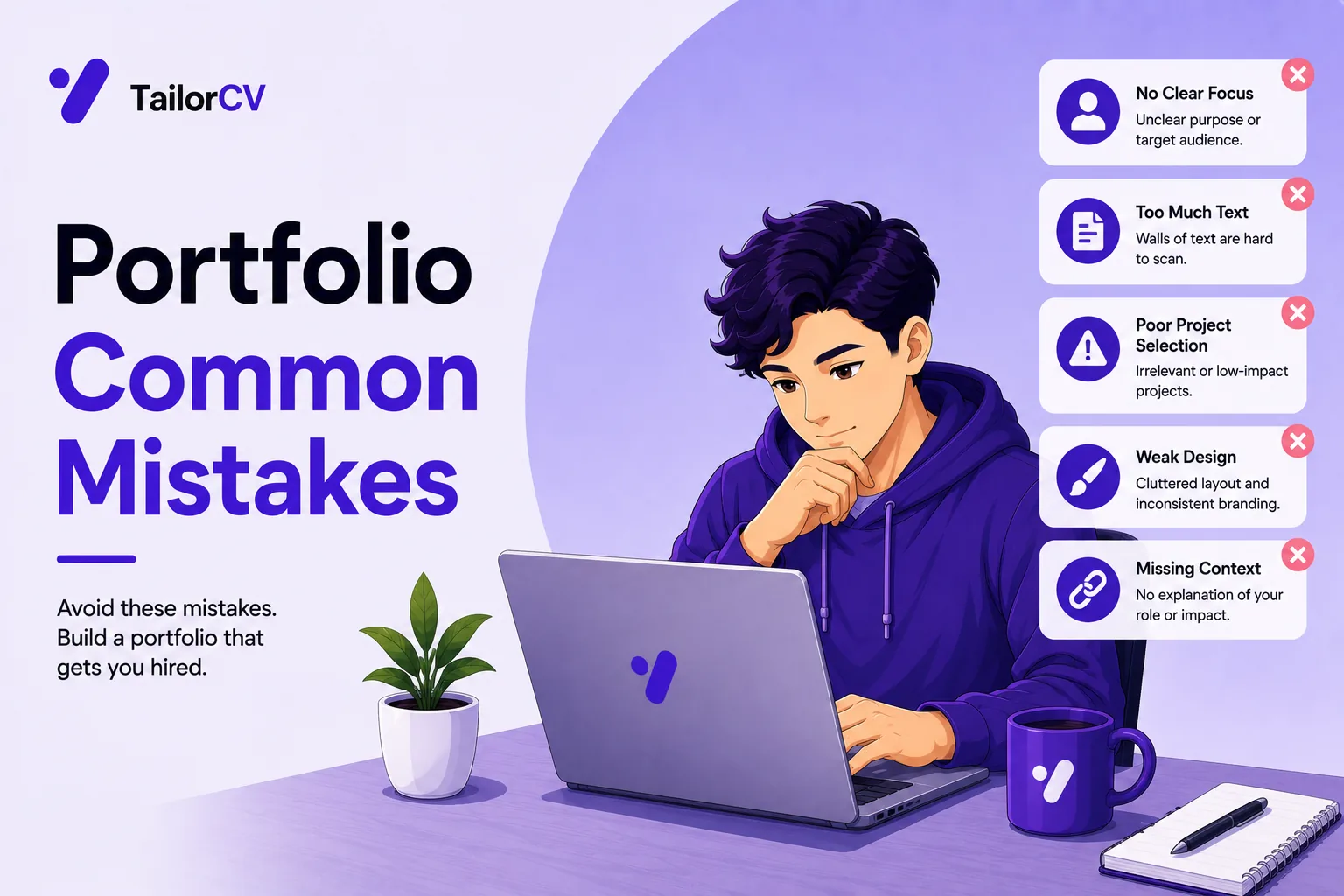
Common Mistakes
Assuming portfolios are only for creative and technical roles. In fields where nobody has one, a modest document differentiates far more than it would in design.
Not building one because of confidentiality. Generalising the employer and using relative figures resolves it, and employers frequently permit sanitised write-ups when asked.
Over-designing it. This is a document demonstrating thinking, not a design exercise — plain and readable is correct.
Describing responsibilities rather than a change. The point is a before-and-after, not a job description in longer form.
Omitting the numbers. A process improvement without a measure is an assertion.
Attaching it to every application. The resume is what gets screened; the portfolio belongs at interview stage or as a follow-up.
Making it eight pages. Two to four, one case study per page or two.
Waiting until you have something impressive. A modest, well-documented improvement beats an undocumented significant one.
Assuming you need seniority to have one. The onboarding example above came from two years of experience and no budget.
Frequently Asked Questions
Do non-technical roles really need a portfolio?
Not expected, which is exactly why one works. In HR, finance and operations almost nobody has one, so a short document of documented improvements stands out.
What if my work is confidential?
Generalise the employer, use relative rather than absolute figures, and describe the shape of the problem. Ask your employer — sanitised write-ups are frequently permitted.
Do I need a website?
No. A well-made PDF of two to four pages is entirely acceptable and often more useful, because you can attach it or leave it behind.
What should each case study include?
The problem, the constraint, what you considered, what you did, and the measurable outcome — the same structure as any case study.
I am only two years in. Do I have anything worth writing up?
Almost certainly. The strongest examples are small process changes with clear before-and-after numbers, not large programmes with big budgets.
When should I share it?
At interview stage or as a follow-up, not attached to every application. The resume is what gets screened.
What if my improvements were small?
A modest improvement documented well beats a significant one you can only describe from memory. The thinking is what is being assessed.
Can I use volunteering or personal work?
Yes, particularly if recent employment is too sensitive to write about. The reasoning it demonstrates is the same.
The resume still gets you the interview. Check your ATS score free.
Make This Practical
Pick two things you improved at work and write each one up as a single page, following the shape of the onboarding example above — the problem, the constraint, what you considered, what you did, the numbers on both sides, and one honest thing you would do differently. That document is the whole portfolio, and it takes an afternoon.
Then solve the confidentiality problem rather than treating it as a blocker. Generalise the employer, use relative figures instead of absolute ones, describe the shape of the problem rather than the data, and ask whether a sanitised version is acceptable — it usually is.
Finally, use it at the right moment. Do not attach it to applications, where the resume does the screening. Bring it to the interview, and when "tell me about a process you improved" arrives, hand over the page instead of describing something from memory.
See what your portfolio could look like
This theme is built straight from your resume — pick one and your portfolio is live in minutes.

Was this guide useful?
Be the first to rate it.