 SS
SS

Key Takeaways
- N2 is the practical threshold where the Japanese job market opens up — below it, your options are a narrow slice.
- N1 is expected for management tracks, client-facing roles and most traditional Japanese companies.
- The JLPT does not test speaking, which employers know, so interviews test it directly.
- JLPT level also contributes points toward Highly Skilled Professional status and the residency route.
- Listing a level is worth far more than describing yourself as "conversational".
The JLPT is the shorthand Japanese employers use to filter candidates, and understanding where the real thresholds sit saves a great deal of wasted applying. The gap between N3 and N2 in particular is not incremental — it is the difference between a small English-operating market and most of the country's employers.
This guide covers what each level actually means for employment, and how to use it.
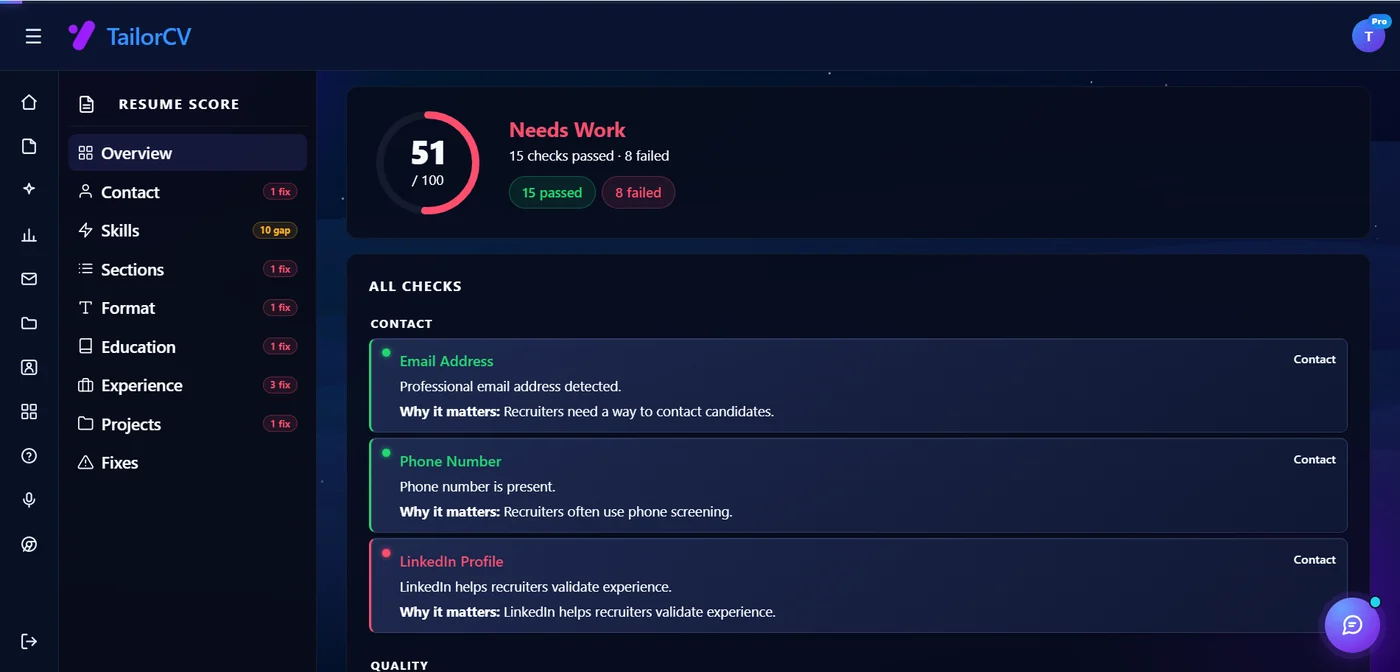
Before applying, check your documents work — the free ATS score checker.
The levels, and what they mean for work
N5 and N4. Basic. Useful for daily life, not a professional credential. Employers do not screen on these, though listing N4 shows you have started, which signals commitment.
N3. Intermediate. Daily conversation and simple workplace exchanges. Some bilingual companies will consider you, and it visibly demonstrates you are progressing. Still below the level most Japanese companies want.
N2. The threshold that matters. This is where the market genuinely opens. Most Japanese companies will consider N2 candidates for professional roles, job postings frequently list it as the requirement, and it is the level at which recruitment agencies start presenting you widely.
N1. The highest level. Expected for management tracks, client-facing work, legal and financial roles, and most traditional Japanese firms. Also the level that makes you competitive against domestic candidates rather than being hired despite your Japanese.
The practical summary: N3 to N2 is the step that changes your career options. N2 to N1 changes your ceiling.
What each level opens
| Level | What you can do at work | Which employers consider you |
|---|---|---|
| N5 / N4 | Daily life, basic greetings | None professionally; signals you have started |
| N3 | Simple workplace exchanges, basic email with help | Some bilingual firms, English-teaching, a few startups |
| N2 | Meetings with effort, reading most documentation, business email | Most Japanese companies, agencies present you widely |
| N1 | Full meetings, client work, internal politics, nuance | Everyone, including management tracks and traditional firms |
The jump from N3 to N2 is where the number of open doors changes, and it is much larger than the numbering suggests. N2 requires roughly 1,000 kanji and 6,000 words against N3's 650 and 3,750 — close to double the vocabulary.
Budget the time honestly. From N3, reaching N2 typically takes 12–18 months of consistent study for someone working full time, and N2 to N1 usually takes longer than that again. Planning a job search around a level you have not yet sat is the most common scheduling error here.
What the JLPT does not test
Speaking and writing production. The exam covers vocabulary, grammar, reading and listening only.
Employers know this. Which means:
Interviews test speaking directly. A candidate with N1 who cannot hold a business conversation is a known phenomenon, and interviewers probe for it — sometimes by switching languages mid-conversation. See Japan business manners guide.
Keigo matters separately. Business Japanese — honorific and humble forms — is its own skill, tested by neither the JLPT nor general conversation practice. Poor keigo is noticeable and matters in client-facing roles.
So passing N2 is necessary rather than sufficient. Practise speaking and business register alongside exam study, not after it.
The three registers, and where each belongs
Textbook Japanese teaches the middle column. Work happens in the other two, which is why fluent-sounding candidates still stumble in interviews.
| Situation | Register | Example — "I will check" |
|---|---|---|
| Friends, family | Casual (タメ口) | 確認する — kakunin suru |
| Textbook, polite default | Polite (丁寧語) | 確認します — kakunin shimasu |
| To a client or your superior | Humble (謙譲語) | 確認いたします — kakunin itashimasu |
| Asking a client to check | Honorific (尊敬語) | ご確認いただけますか — go-kakunin itadakemasu ka |
Interviews are conducted in the bottom two rows, and the JLPT tests neither. A candidate who answers an interview entirely in ます-form is understood perfectly and still sounds like a student rather than a colleague.
The cheapest fix is learning the humble and honorific forms of the twenty verbs you will actually use in an interview — する, 行く, 来る, 言う, 見る, 聞く, 思う, 会う and so on. That is an afternoon of study and it changes how you are heard.
Where the level actually matters
Traditional Japanese companies. N2 minimum in most cases, N1 preferred, particularly for anything involving internal documentation or meetings.
Foreign-owned companies (gaishikei). Frequently English-operating, where JLPT may not be required at all. This is the segment genuinely open to non-speakers — see gaishikei vs domestic companies.
IT and engineering. More flexible than most sectors. Some roles are English-operating, though N2 substantially widens what is available — see IT jobs in Japan for foreigners.
Sales, customer-facing and consulting. N1 in practice, because the work is the language.
Startups. Varies enormously; some operate in English, many do not — see the Japan startup jobs guide.
Teaching English. JLPT not required and sometimes deliberately not used — see English teaching jobs in Japan.
The immigration angle
Worth knowing because it is a second return on the same study.
JLPT level contributes points under the Highly Skilled Professional points system. Clearing the threshold brings a longer period of stay, permission for a spouse to work, and a substantially accelerated route to permanent residency.
Which means N2 or N1 is worth points as well as jobs, and for people close to the HSP threshold, language study can be the cheapest way over it — see the Japan work visa guide.
The practical implication: if you are a few points short of the HSP threshold, compare what it costs to gain those points through language study against every other route. For most people it is the cheapest and most controllable option on the list, and it improves your employment prospects at the same time.
Putting it on your documents
State the level and the year. "JLPT N2 (2025)" is concrete and screenable.
Never write "conversational Japanese" as your only claim. It tells a Japanese employer nothing measurable, and vague self-assessment is treated sceptically.
If you have not taken the exam, describe function precisely: "Daily business conversation; reading email and documentation with a dictionary." Honest and useful.
If you are studying toward a level, say so with the target date: "Studying toward N2, sitting December 2026." That reads as commitment rather than as a gap.
Place it in the skills or qualifications section of your rirekisho and shokumu keirekisho — see the shokumu keirekisho guide and the rirekisho guide.
Exam timing, and what it means for your search
The JLPT runs twice a year, in July and December, with results issued roughly two months later. That schedule has consequences most applicants do not plan around.
Results arrive in late August and late January. If a job posting requires N2 and you sat the July exam, you cannot evidence it until the certificate arrives — and applications frequently close before that.
Registration closes months ahead, typically around March for July and August for December. Missing it means waiting half a year.
So work backwards from when you want to be applying. If you want to be job-hunting with N2 in hand by spring, you need to pass the December exam, which means registering by roughly August and studying through the year before it.
In the meantime, state the target date on your documents. "Studying toward N2, sitting December 2026" is checkable and specific, and it is much better than leaving the language line empty while you wait.
Common Mistakes
Applying broadly with N3 or below. Most Japanese employers screen at N2, so a wide application strategy below it produces very low response rates.
Underestimating the N3 to N2 gap. It is close to double the vocabulary and kanji, and typically 12–18 months of study rather than a few months.
Assuming N1 alone makes you competitive. It does not test speaking, and interviewers probe for the gap directly.
Interviewing entirely in ます-form. You will be understood and you will sound like a student. Learn the humble and honorific forms of the verbs you will actually use.
Ignoring keigo. Business Japanese is a separate skill from conversational fluency, and it matters in client-facing and traditional environments.
Writing "conversational Japanese". It is unmeasurable, and Japanese employers treat vague self-assessment sceptically.
Not planning around the exam calendar. Two sittings a year and a two-month wait for results means a missed registration costs you half a year.
Not listing a study target when you have no level yet. "Studying toward N2, sitting December" reads far better than silence.
Overlooking the immigration points. JLPT contributes to Highly Skilled Professional status, which affects your route to permanent residency.
Studying only for the exam. Reading and listening pass the test; speaking and keigo get you through the interview.
Frequently Asked Questions
What JLPT level do I need for a job in Japan?
N2 is the practical threshold for most professional roles at Japanese companies. N1 is expected for management, client-facing and traditional firms. Foreign-owned companies may require none.
Is N3 enough?
Rarely for professional roles at Japanese employers. It helps for daily life and signals progress, but the market genuinely opens at N2.
How long does N3 to N2 take?
Typically 12–18 months of consistent study alongside full-time work. It is close to double the vocabulary and kanji, so it is a much larger step than the numbering implies.
When is the exam held?
July and December, with results about two months later and registration closing months ahead. Plan your job search backwards from when the certificate will actually be in hand.
Does the JLPT test speaking?
No — only vocabulary, grammar, reading and listening. Employers know this and test speaking directly in interviews, sometimes by switching languages mid-conversation.
What is keigo and does it matter?
Business Japanese honorific and humble forms. It is a separate skill from conversational fluency, untested by the JLPT, and it matters in client-facing and traditional workplaces.
Can I get by in an interview using only polite ます-form?
You will be understood, but you will sound like a student rather than a colleague. Learning humble and honorific forms for about twenty common verbs fixes most of it.
Do I need Japanese for IT jobs?
Not always. Foreign-owned companies and some startups operate in English, though N2 substantially widens the roles available to you.
Does JLPT help with immigration?
Yes. It contributes points under the Highly Skilled Professional system, which affects length of stay, spousal work rights and the route to permanent residency.
How should I state my level on a resume?
The level and year — "JLPT N2 (2025)". If you have no level, describe function precisely or state your study target and exam date.
Check your application documents before submitting. Check your ATS score free.
Make This Practical
Treat N2 as the goal that changes your options, and budget honestly for it — from N3 that is usually 12 to 18 months, not a few. Below N2, target foreign-owned companies deliberately rather than applying broadly and reading the silence as bad luck.
Then work backwards from the exam calendar. Sittings are July and December, results take about two months, and registration closes months ahead — so decide now which sitting puts the certificate in your hand before the applications you care about close, and state the target date on your documents in the meantime.
Finally, spend one afternoon on the humble and honorific forms of the twenty verbs you will actually use in an interview. The JLPT never tests them, interviews are conducted in them, and answering entirely in ます-form is the difference between sounding like a student and sounding like a colleague.
What is your resume scoring right now?
Scan it against a job description and get your ATS match score in about a minute.
Drop your resume here or choose a file
PDF only. Max 2 MB.
We never share your data or use it to train AI models.
Was this guide useful?
Be the first to rate it.