 TD
TD
Key Takeaways
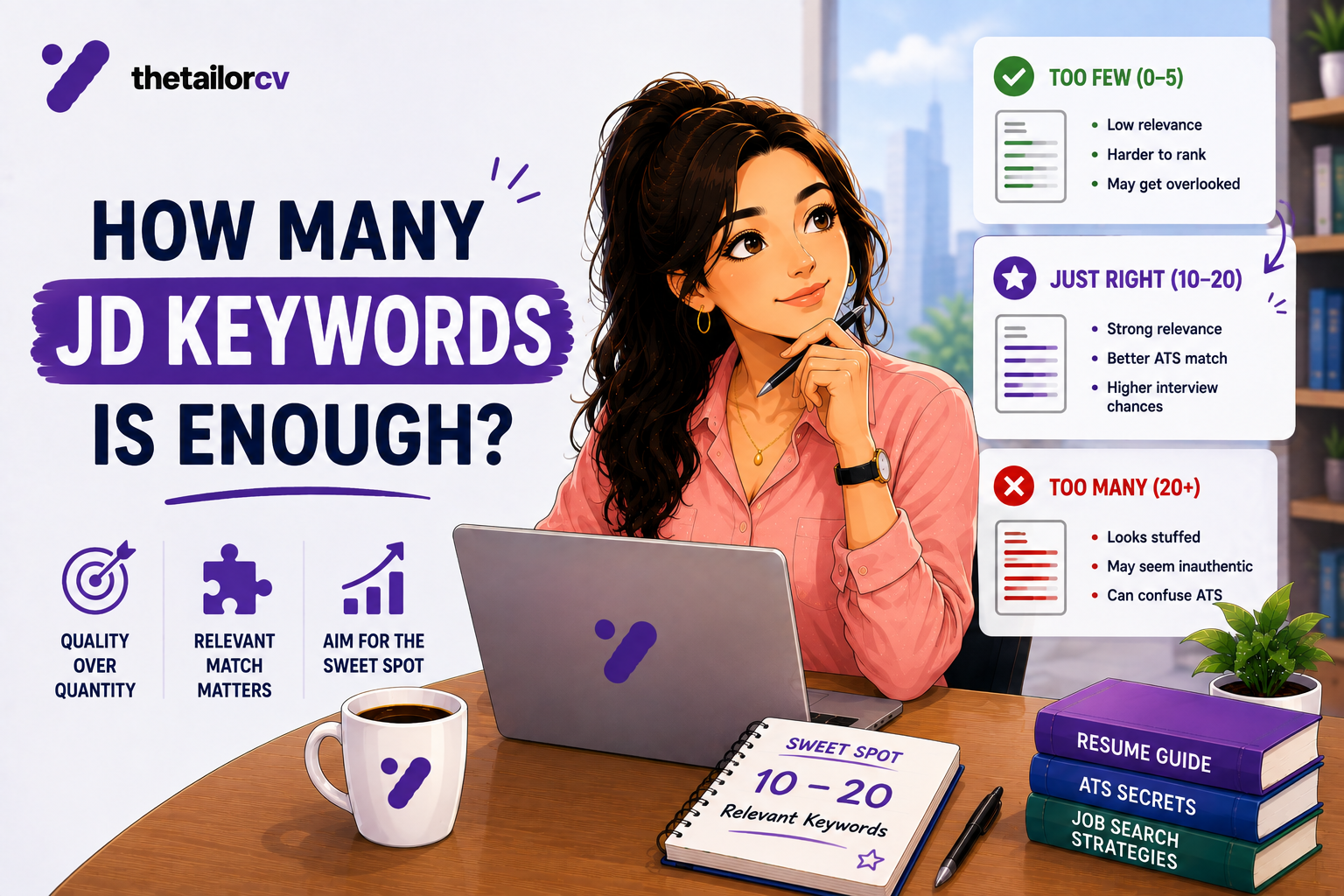
- There is no fixed keyword count that guarantees a pass — coverage of the right ones matters more than total quantity.
- The realistic target is required items covered, plus as many genuine preferred items as honestly apply.
- More keywords beyond genuine coverage does not keep helping — returns flatten quickly and stuffing starts hurting.
- A posting with 30 listed skills does not require 30 matches; it requires the handful that are actually load-bearing.
- The right question is not "how many" but "which ones," and the missing-requirements list answers that directly.
"How many keywords should my resume have" is a natural question with no clean numeric answer, because the number that matters is not a count — it is coverage of the specific things a particular posting cares about.
Why There Is No Universal Number
Different postings list wildly different numbers of skills and requirements — some five, some thirty. A fixed target like "use 15 keywords" makes no sense applied uniformly across postings that differ this much in scope. The right number for any given application is determined by that posting, not by a general rule.
The Real Target: Required Coverage, Not Raw Count
The goal is not maximising how many keywords appear on your resume. It is covering the requirements a specific posting states as genuinely important, using language close to how the posting states them. A resume that covers five required items precisely outperforms one that scatters twenty loosely related terms without depth behind any of them.
This is the same distinction covered in required vs preferred qualifications — a handful of the right matches beats a large number of weak ones.
Diminishing Returns
Coverage helps up to a point, then flattens, then actively reverses if pursued past honest coverage:
Missing several required items: likely to cost you meaningfully in ranking.
Covering all required items, missing some preferred: normal, healthy position for most applicants to most postings.
Covering everything, including items you do not genuinely have: this is where things go wrong — see keyword stuffing and improving your score without lying. Beyond genuine coverage, adding more keywords either does very little or actively signals manipulation to both matching systems and human readers.
The useful mental model is a coverage curve that rises steeply while you are filling real gaps, then flattens once required items are covered, then turns negative if you start inventing coverage that is not genuinely true.
A Posting With 30 Skills Does Not Need 30 Matches
Long skill lists are common, particularly at larger companies where a requisition accumulates input from multiple stakeholders. A posting listing thirty skills rarely expects a single candidate to have all thirty — it is closer to an aspirational composite than a literal checklist.
The practical approach: identify which of the thirty are genuinely required (see required vs preferred qualifications for the language signals) and focus your resume on covering those, honestly, rather than trying to touch all thirty superficially.
How to Find Your Actual Target for a Specific Posting
1. Read the posting and sort into required and preferred. This gives you your real target list, usually far shorter than the full posting.
2. Check which required items you genuinely have but have not stated clearly. This is your highest-value, most honest source of additional coverage — see which missing skills actually matter.
3. Add those, precisely, in the language the posting uses. Stop once required items are covered and any genuinely-held preferred items are included.
4. Do not continue adding preferred items you do not have. The marginal benefit is low and the honesty cost is real.
This process naturally produces the right number for that specific posting — you do not need to count anything, because the target is defined by what you honestly cover, not by a number chosen in advance.
What "Enough" Actually Looks Like
For most postings, a resume that genuinely covers its required items and speaks honestly to two or three preferred ones is a strong, complete application. This might mean explicitly naming five specific keywords, or fifteen, entirely depending on how the posting itself is structured — the resume adapts to the posting's actual content, not to a target number decided independently of it.
Frequently Asked Questions
Is there a percentage I should aim for on a match score? See what is a good ATS match score — the useful target is required-item coverage, which the percentage roughly but imperfectly reflects.
Should I try to include every skill listed in the posting? No — sort into required and preferred first, and focus on genuine coverage of the required list plus whichever preferred items honestly apply to you.
Can having too many keywords hurt me? Yes, once it crosses from genuine coverage into stuffing or fabrication. See keyword stuffing.
How do I know when I've covered enough? Re-scan after your edits and check whether the required items on the missing list have cleared. Once they have, you are done — further additions have low return.
Does a longer resume automatically have better keyword coverage? No — length and coverage are separate. A concise resume that precisely covers the right requirements outperforms a long one padded with loosely related terms.
Find Your Actual Target for This Posting
Rather than guessing at a number in the abstract, the fastest way to know what "enough" means for a specific application is to check directly.
Scan your resume against the posting and look at the missing-requirements list. That list — not a general rule of thumb — tells you exactly what coverage would move your standing, and roughly how much work remains.
Free, about a minute. See also which missing skills actually matter and required vs preferred qualifications.
See which keywords you are missing
Scan your resume against the posting and get the exact terms it did not find.
Drop your resume here or choose a file
PDF only. Max 2 MB.
We never share your data or use it to train AI models.

Where those keywords actually go
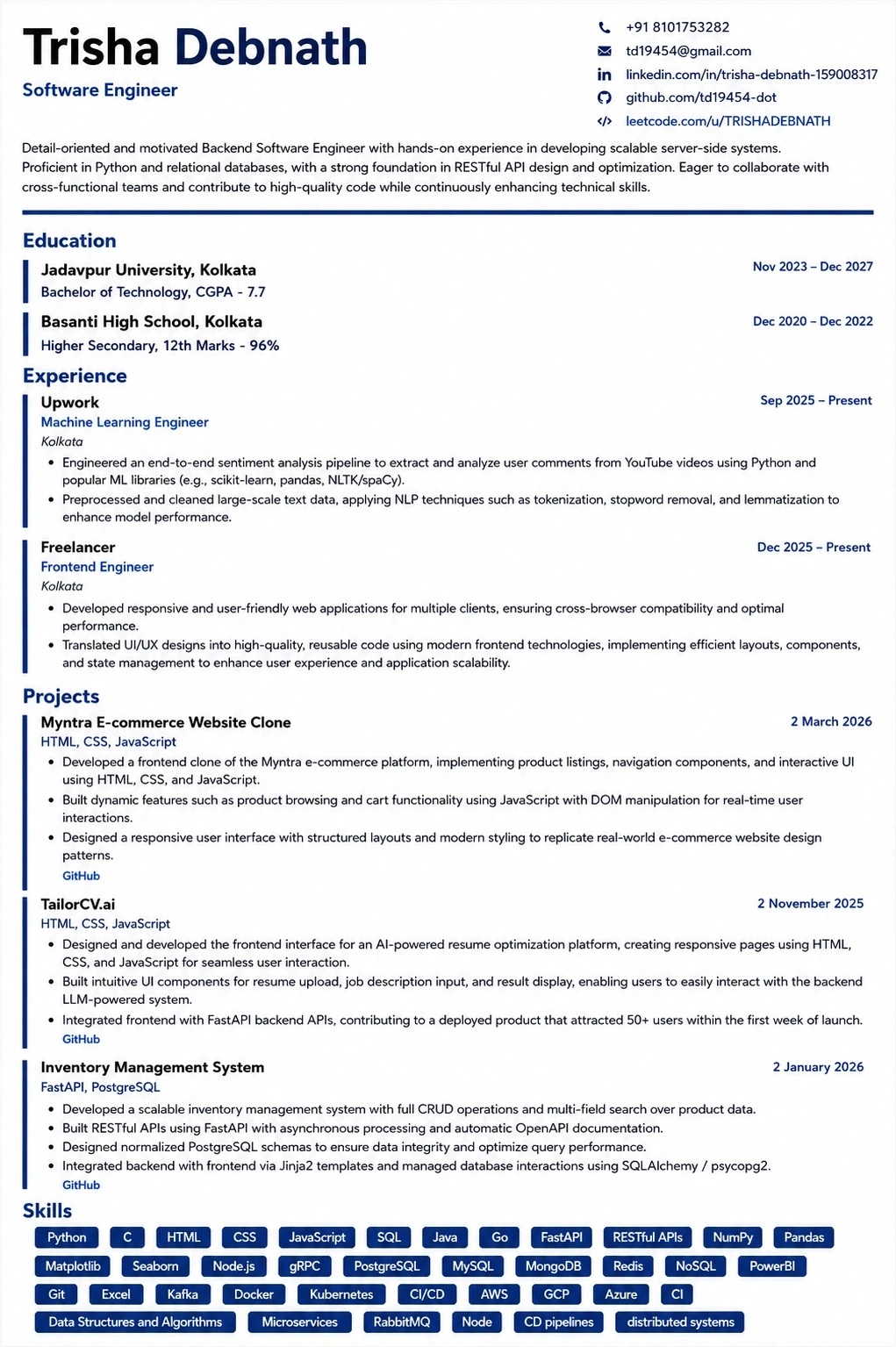
A layout with a real skills section gives the parser somewhere clean to find every term you just added.
Was this guide useful?
Be the first to rate it.