 TD
TD
Key Takeaways
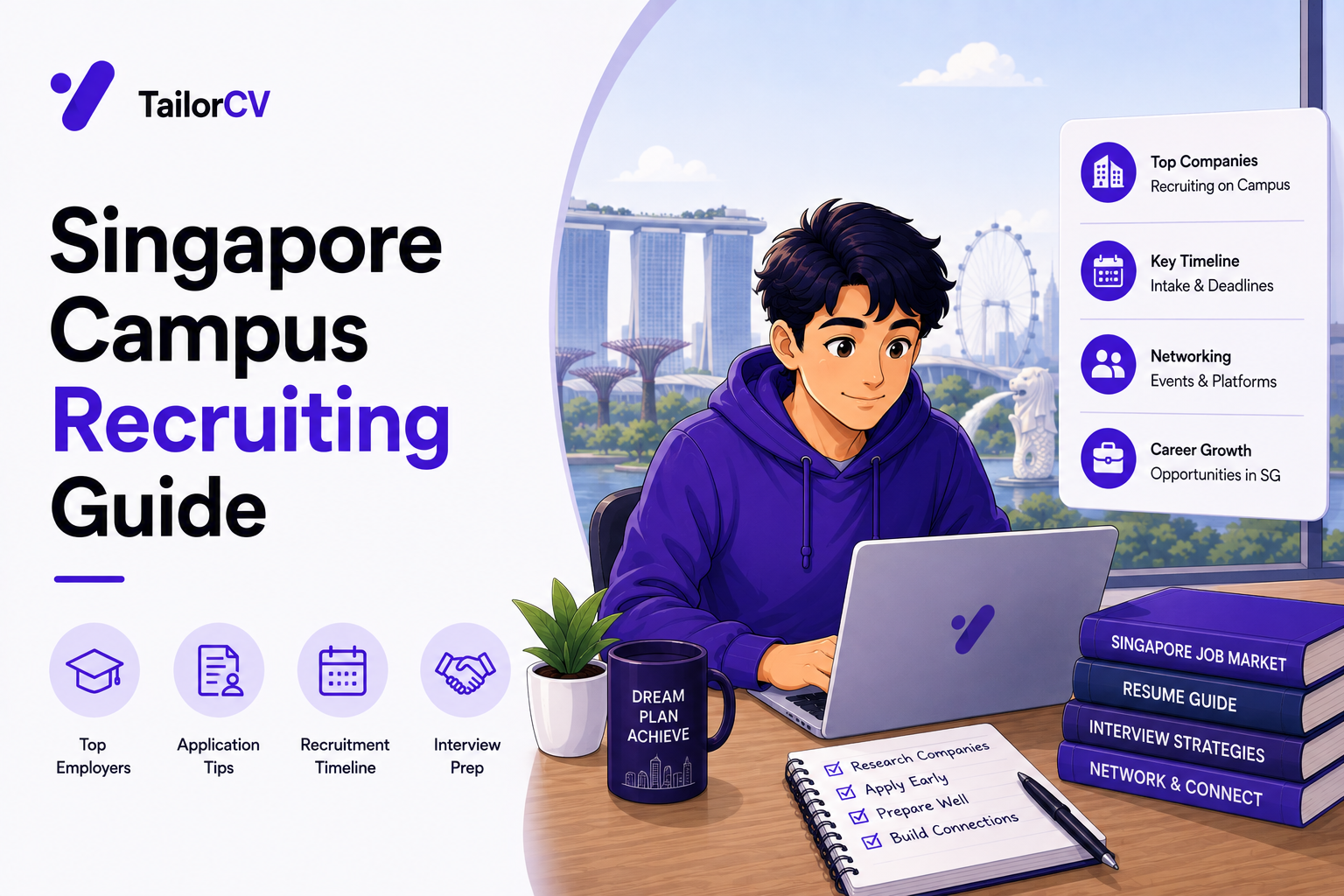
- The structured route into large Singapore employers is the management associate or graduate programme, and applications open roughly a year before the start date.
- Banking, consulting and the civil service run the earliest and most formal processes; tech and startups hire much closer to need.
- Work pass eligibility shapes hiring more than in most markets, because employers are subject to local hiring rules before they can hire a foreigner.
- Graduates from the local universities have a structural advantage in campus channels, but not in open applications.
- Assessment centres and multiple interview rounds are standard even for entry-level roles.
The shape of the market
Useful orientation, because students frequently apply as though there were one graduate market when there are really four, each running differently.
Structured graduate programmes. Management associate schemes at the local banks, graduate programmes at multinationals, consulting intakes, and the civil service schemes. Formal, annual, heavily assessed, opening roughly a year ahead. This is what most students mean by "campus recruiting" and it is the smallest of the four by headcount.
Direct-entry professional roles. Analyst, engineer and executive positions filled as they open rather than through a cohort. Far more numerous than the programmes, much less visible, and considerably less contested. These are found on company career pages rather than through campus channels.
Technology hiring. Runs on its own logic entirely — rolling requisitions, technical assessments, and very little relationship to the annual calendar. Covered in the technology market guide.
The public sector. Ministries, statutory boards, healthcare and education clusters. Structured, formal, long timelines, and systematically overlooked. In aggregate a major graduate employer — see the public sector guide.
What follows practically: a student who applies only to structured graduate programmes is competing for the smallest and most contested slice of the market, on the tightest calendar, against everyone else who did the same. Adding direct-entry roles and the public sector to the list roughly changes the size of the pool you are drawing from, at very little extra cost.
Management associate programmes
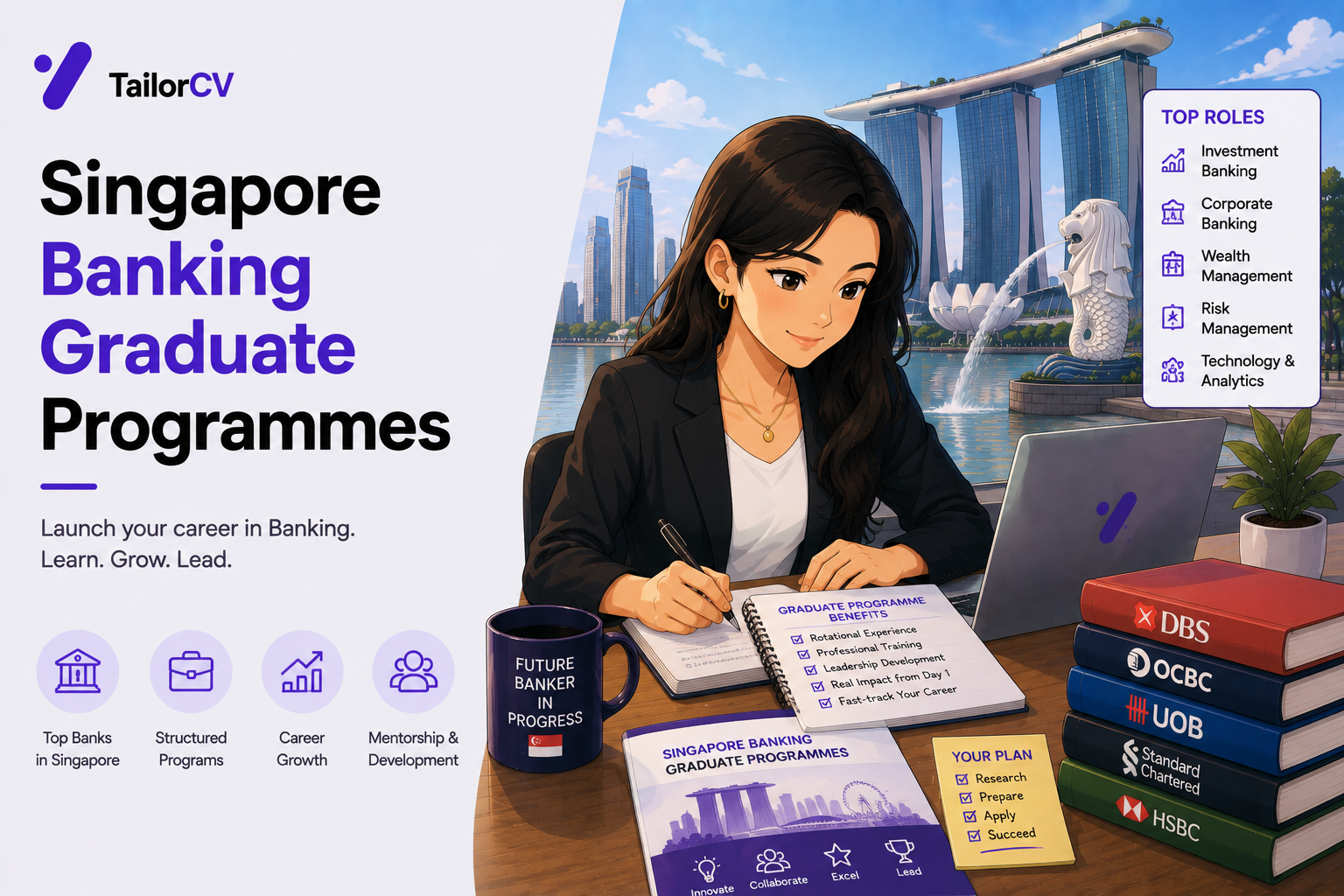
The flagship structured route is the management associate programme, sometimes called a graduate programme or graduate development programme.
What they typically involve:
- A fixed intake, usually annual
- Rotations across two to four functions over 18 to 36 months
- Structured mentoring and a defined progression track
- A cohort you move through the programme with
They are competitive in the way campus programmes usually are: many applicants, few seats, a long assessment process. The banks and the larger multinationals are the most sought after.
Timing. Applications generally open between August and October for intakes starting the following year. Some run a second, smaller cycle in the new year. If you are applying in April for a July start, the structured programmes have already closed.
This is a similar rhythm to US campus recruiting and the UK graduate scheme calendar — plan around the autumn, not the spring.
The assessment process
Expect more stages than the role seems to warrant. A typical sequence:
- Online application with a resume and often several written questions
- Online assessment — aptitude, numerical reasoning, situational judgement, sometimes a game-based test
- Video interview, frequently one-way and recorded
- Assessment centre — group exercise, case study, presentation, individual interviews
- Final interview with senior staff
The assessment centre is where most decisions are made and where most candidates underprepare. Group exercises in particular are unfamiliar to people who have only done conventional interviews, and the common failure is either dominating the discussion or disappearing from it. Assessors are watching how you handle other people, not whether you reach the right answer.
The written application questions matter more than students assume. "Why this company" answered generically is a common early rejection, and generic answers are easy to spot when a recruiter reads two hundred of them.
Work passes and why they shape hiring
This is the part that differs most from other markets, and it is worth understanding before you apply.
Employers hiring foreign professionals must satisfy local hiring requirements before a pass application will succeed. In practice, roles are advertised locally first, and employers must be able to show they considered local candidates. Pass frameworks also have qualifying salary thresholds that rise with age and experience, and these are reviewed periodically.
The practical effects on a graduate job search:
- Some employers simply will not consider candidates who need a pass for entry-level roles, because the administrative cost is not worth it at that salary level.
- Others do it routinely, particularly multinationals and firms competing for scarce technical skills.
- Your eligibility is worth understanding before you apply, not after an offer conversation stalls.
If you are an international student graduating from a Singapore university, your position is considerably stronger than someone applying from overseas — you are already here, already known to local employers, and the transition is more familiar to HR teams. The work pass landscape for graduates is the single most important administrative thing to get straight early.
The local university advantage, honestly
Worth stating plainly rather than pretending it does not exist.
Where it is real. Campus recruiting channels — careers fairs, on-campus interviews, employer presentations, university job portals — are open to students at the local institutions and effectively closed to everyone else. Structured graduate programmes at banks and statutory boards recruit heavily through these channels. That is a genuine, meaningful advantage and it operates at the access stage.
Where it is not. Open applications, referrals and technical assessments do not care where you studied. Once you are in a process, an overseas graduate from a strong programme competes on equal terms, and in technology hiring — where the bar is objective — the effect is close to zero.
What an overseas graduate should do differently:
Apply directly to the Singapore entity, not through a global careers portal that may route you into an unrelated pipeline.
Work the referral channel harder, because it is the substitute for the campus channel you do not have. Alumni from your own institution now working in Singapore are the highest-yield group.
Time everything to the local calendar rather than your own country's.
Have a specific answer to "why Singapore". This is asked of every overseas applicant, and a vague answer about opportunity reads poorly. Regional exposure, a sector concentration, family or language ties, an intention to build a career in Asia — any genuine reason works.
Be precise about your pass position. Knowing where you stand under the pass framework and saying it in one sentence moves you from an unknown to a known quantity.
And be realistic about which employers were ever plausible. Pass willingness varies enormously by employer size and function, and spending an autumn applying to employers who cannot sponsor at graduate salary levels is the most common way overseas candidates waste a cycle.
Resume expectations
Singapore resume conventions sit between British and American practice, and differ from both.
- One to two pages for a graduate. Two is acceptable in a way it is not in the US.
- Photos are not expected and are increasingly discouraged, though you will still see them.
- Personal details such as nationality and work pass status are commonly included, unlike the US where they are actively unwelcome — because pass eligibility is genuinely relevant to the hiring decision here.
- Grades matter and are usually stated, including class of honours.
The Singapore resume format guide covers the structure in more detail. Whatever format you use, the document is screened by software at any employer of size, so check that it parses cleanly before submitting — an elegant two-column layout that a parser cannot read fails before a human sees it.
Where the less crowded opportunities are
The pattern that repeats in every market: applications concentrate on the most visible employers, leaving genuinely good routes under-contested.
Bank technology. Large engineering organisations building payments, trading and risk systems at real scale. A software graduate applying here competes against a fraction of the field they would face at a well-known product company, for work that is more substantial than the stereotype suggests. Covered properly in the banking guide.
Statutory boards and the public sector. A major graduate employer in aggregate, structured programmes, national-scale work, and consistently overlooked because the brand signal to peers is weaker. The public sector guide covers what the work actually is.
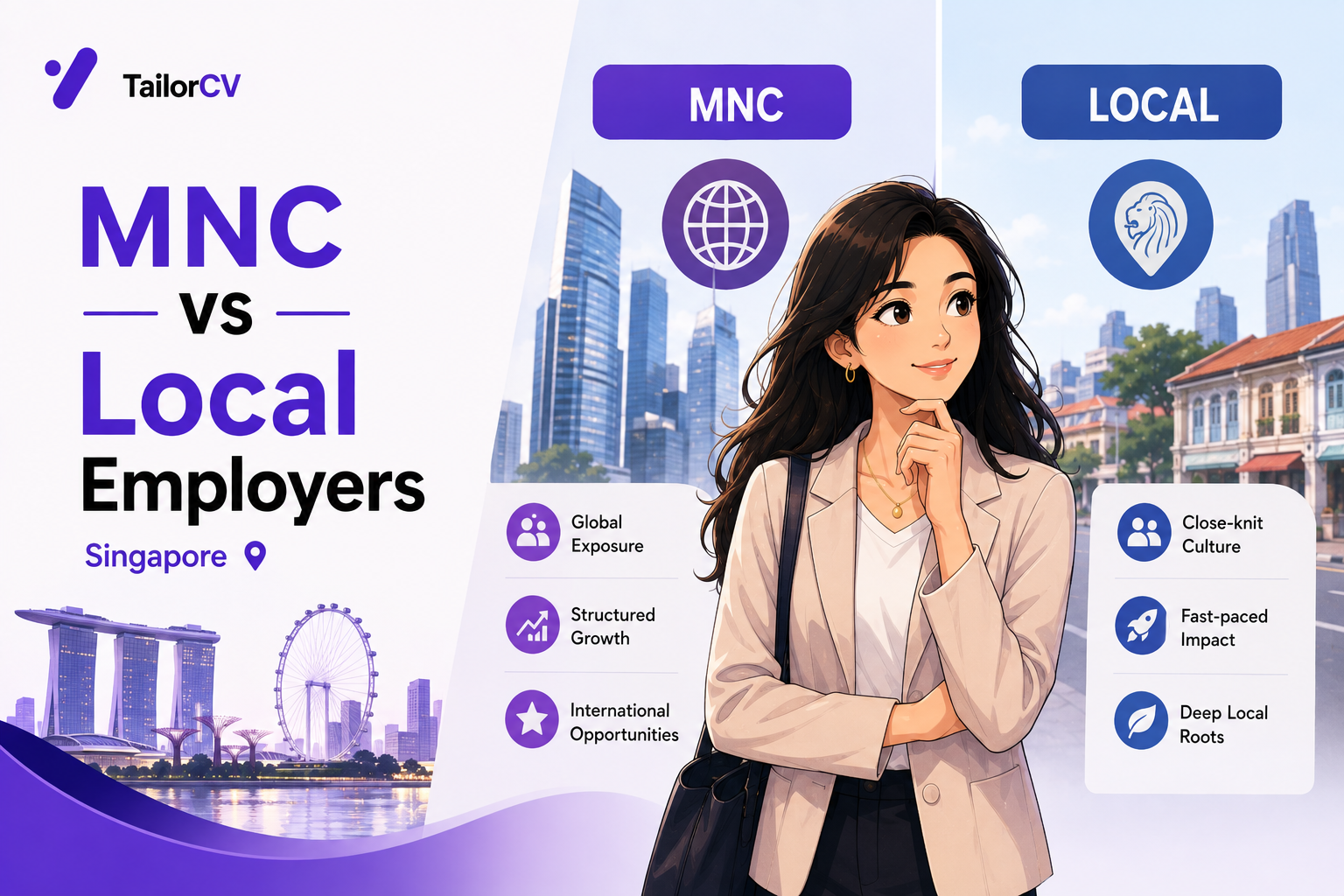
Mid-sized local firms. Less structured, less visible, and frequently offering more responsibility earlier than a graduate programme at a multinational. The MNC versus local comparison sets out the trade-off honestly.
Regional roles at multinationals. Positions covering Southeast Asia from a Singapore base, which are often filled less formally than the headline graduate programme and attract fewer applicants because they are not advertised as a graduate scheme.
Risk, compliance and operations at financial institutions. Analytically demanding, growing, and far less contested than front office.
Supply chain, logistics and manufacturing. Substantial employers with real graduate hiring, almost invisible to students focused on banking and technology.
The general instruction: your application list should not be the same list as everyone else in your cohort. Adding four employers nobody in your class has thought about changes your odds more than polishing the applications to the four everybody has.
The calendar, month by month
"Roughly a year ahead" is directionally right and not actionable. This is what a final-year student's cycle actually looks like.
June to July, before final year. Structured programmes at the banks and larger multinationals begin opening. Some open earlier than the students expect and close on a rolling basis, which means an application in September is competing against a pile that has been accumulating since July.
August to October. The main window. Management associate programmes, bank graduate schemes, consulting, and the larger multinational programmes are open. Careers fairs run on campus at the local universities during this period, and employers attend in force.
October to December. Online assessments, video interviews and first rounds. Assessment centres begin.
December to February. Assessment centres continue and offers begin to land, frequently with deadlines shorter than students expect.
January to March. A visible second wave — employers who under-filled, programmes with a January intake, and the public sector, which runs on its own longer timeline.
Year round. Technology roles, startups and smaller employers hire close to need rather than on a calendar. If your target is a product company or a regional platform, the annual cycle matters far less and checking career pages weekly matters far more.
Two things students get wrong. They apply in the same calendar year as their start date, by which point the structured programmes have closed. And they treat the whole market as though it ran on the banking calendar, when a substantial share of good employers do not run a calendar at all.
Management associate programmes, in detail
The flagship structured route, and worth understanding properly because students apply to them without knowing what they are.
What they are. Two to three year programmes rotating you through several functions — retail, corporate, risk, operations, technology at a bank; commercial, supply chain, marketing at a consumer company. Structured progression, defined pay bands, a cohort you join with, and senior sponsorship.
Who runs them. The local banks at the largest scale, multinational regional headquarters, insurers, consumer goods companies, and the larger statutory boards under their own scheme names.
What they are good for. Breadth, a view of how the business connects, a cohort that spreads across the industry within five years, and access to senior people a direct hire at the same level does not get.
What they cost you. Depth. Six months in a function is enough to be useful and not enough to be good, and a direct-entry specialist will be substantially more skilled in their area at the two-year mark. The full trade-off is set out in the rotational programme guide, and the short version is that these suit people who do not yet know what they want and suit specialists poorly.
Final placement is not entirely yours to choose. It is decided by business need, by which rotation managers advocate for you, and only third by your stated preference. Perform in the rotation you did not want, because that manager still gets a vote.
Ask two questions before accepting: what proportion of the last cohort was placed into a permanent role, and which functions did they actually rotate through. Vague answers to either are worth noticing.
What employers ask that catches candidates out
Three questions recur in Singaporean graduate processes and are answered badly by people prepared on international material.
"When can you start?"
A date. Not "after graduation", not "mid-year". Recruiters are matching you to a cohort start or a live vacancy and an imprecise answer creates work for them.
"Are you planning to stay in Singapore long term?"
Asked of most foreign candidates and it is not hostile. An honest answer is sufficient, including one that names a region rather than a country. What reads badly is a defensive non-answer, which suggests the honest one is no.
"What other roles are you looking at?"
Common, and not a trap. Naming a sector and a couple of comparable employers is fine and reads as someone with a considered search. Claiming this is the only application you have made is not believed.
Underneath all three is the same thing: recruiters here ask direct questions and expect direct answers, and treating a routine question as delicate is what makes it awkward.
Common Mistakes
- Applying only to the famous short list. Everyone does, and the odds reflect it.
- Missing the autumn window. Structured programmes close months before the intake starts.
- Treating the assessment centre as an interview. Group exercises assess behaviour, and preparation for them is different.
- Generic "why this company" answers. The most common early rejection in written applications.
- Ignoring work pass eligibility until offer stage. It shapes which employers are realistic and is better understood early.
- Assuming grades alone carry you. They clear filters; the assessment centre decides.
Resume and application expectations
Local conventions differ from US and UK practice in ways that matter mechanically.
Length. One to two pages is acceptable, and two is more normal here than in US campus hiring.
Grades. Classification and GPA are commonly included and frequently expected, particularly by banks and the public sector. This differs sharply from US convention.
Personal details. Some employers still expect nationality and pass status. Photographs are not required and are increasingly uncommon.
Availability date. Include it. Recruiters check it early and a precise date saves a round trip.
The full conventions are in the Singapore resume format guide, and the application and cover letter guide covers the written questions, which carry more weight in structured programmes here than most candidates expect.
One thing that does not differ: every employer of size parses your document with software before a human reads it. A resume that does not extract cleanly fails identically in every market, and an ATS check is a one-time job that removes the risk entirely.
The assessment process, stage by stage
Longer and more formal than students expect, particularly at banks, consultancies and the public sector.
Online application with written questions. These are read and scored at structured employers, and a generic "why this company" answer is the most common early rejection. The application guide covers what a strong answer contains.
Online assessments. Numerical, verbal and situational judgement testing is standard at the larger programmes, and increasingly game-based formats. The psychometric mechanics transfer directly — the same providers and formats are used internationally.
Recorded video interview. Common at banks and multinationals, usually before any live conversation. The video interview guide applies without modification.
Assessment centre. Group exercise, case study, presentation, interviews. Half a day. Scored against a competency framework rather than by ranking candidates against each other, which means helping the group costs you nothing. The assessment centre mechanics transfer closely, since the format is essentially the same.
Final interview with senior staff, often more about motivation and fit than assessment.
For technology roles the shape differs entirely: online coding assessment, technical phone screen, then a technical loop, following international formats. The technical preparation applies with almost no adjustment.
Timelines run in weeks rather than days between stages, and months in the public sector. Factor that in if you are holding an offer with a deadline elsewhere, and ask each employer for their expected timeline rather than guessing.
A season, planned
June to July. Build the list — and make it wider than your classmates'. Structured programmes, direct-entry roles, at least two statutory boards, and the bank technology functions. Twenty-five to thirty-five employers. Fix the resume to local conventions and confirm it parses cleanly.
August. Applications open. Apply early — several programmes review on a rolling basis, and a September submission meets a pile that started accumulating in July. Write the "why this organisation" paragraph fresh each time; it is the paragraph that decides the sift.
September to October. Careers fairs on campus, peak applications, and psychometric tests arriving. Practise the tests before the first live one rather than treating an employer's assessment as practice.
November to December. Video interviews and first rounds. Assessment centres begin.
January to February. Assessment centres, final interviews, offers. Deadlines are frequently shorter than expected.
February to April. The second wave — under-filled programmes, January intakes, the public sector concluding its longer processes, and the continuous technology market. Students who stop in December miss this entirely.
Throughout. Know your salary number, know your pass position in one sentence, and keep applying while you are interviewing. Pausing applications during a promising process that then ends in week six is the most common self-inflicted wound of the season.
Frequently Asked Questions
When should I apply for a graduate programme in Singapore?
Generally August to October for the following year's intake, with some employers running a smaller second cycle. Applying in the same calendar year as the start date usually means the structured programmes have closed.
Do I need a Singapore degree to get hired?
No, but a local degree gives you access to campus channels that are otherwise closed. Overseas graduates compete effectively through direct applications and referrals — the disadvantage is in access, not in assessment.
How important are grades?
They matter more than in the US and are usually stated on the resume, including honours classification. They are most decisive at the screening stage; beyond that the assessment centre carries more weight.
Will employers sponsor a work pass for a fresh graduate?
Some will, particularly multinationals and firms hiring scarce technical skills. Many will not at entry-level salaries. Understanding the pass framework tells you which employers are realistic before you spend applications on them.
What is an assessment centre actually like?
Typically half a day: a group exercise, an individual case or presentation, and one or two interviews. Assessors score against defined competencies rather than ranking candidates against each other, so helping the group succeed does not cost you.
Are internships important in Singapore?
Yes, and increasingly so. Many employers convert interns, and an internship at a recognised local employer is strong evidence for graduate applications — the same conversion dynamic that dominates US hiring applies here.
What is your resume scoring right now?
Scan it against a job description and get your ATS match score in about a minute.
Drop your resume here or choose a file
PDF only. Max 2 MB.
We never share your data or use it to train AI models.

Was this guide useful?
Be the first to rate it.