 TD
TD
Key Takeaways
- Singapore's position as a major global port and trade hub makes supply chain and logistics a genuinely substantial employment sector, not a niche one.
- The sector spans far more than physical logistics, procurement, planning, analytics and technology roles within supply chain are all real, substantial career paths.
- Structured graduate programs exist at major logistics, shipping and trading companies, alongside broader opportunity at manufacturers and retailers managing complex regional supply chains.
- This sector is consistently underexplored by students focused on finance, consulting and technology, despite genuine scale and interesting, technically substantial work.
- Regional exposure is a real feature of the work, given Singapore's role as a hub coordinating activity across Southeast Asia and beyond.
Why this sector is genuinely substantial here
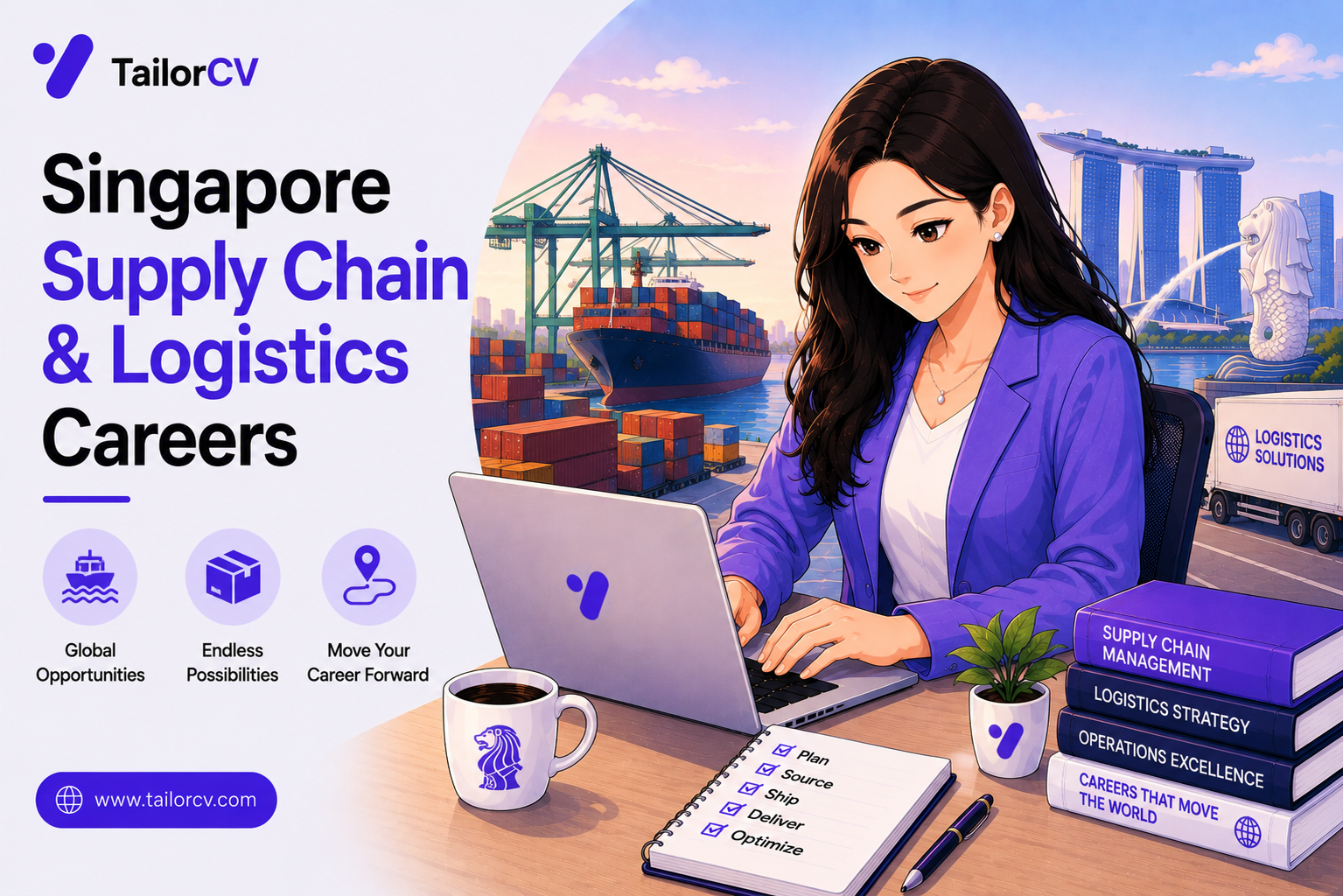
Singapore's position as one of the world's busiest ports and a major global trade and logistics hub means the supply chain sector here is not a secondary or niche industry, it is a core part of the economy, employing very substantial numbers of people across shipping, freight, warehousing, trade finance and the broader logistics ecosystem that supports regional and global trade flows.
Major shipping lines, logistics companies, freight forwarders and trading houses maintain significant regional operations here, alongside the regional headquarters of manufacturers and retailers who manage complex Southeast Asian and broader Asian supply chains from a Singapore base.
The range of roles beyond physical logistics
This is worth understanding clearly, since students often assume supply chain work means warehouse and physical operations roles alone, when the actual range is considerably broader.
Supply chain planning and analytics, forecasting demand, optimising inventory, and increasingly applying genuine data science and analytical methods to logistics problems, similar in spirit to analytical roles seen across other sectors, real technical work with genuine business impact.
Procurement and sourcing, managing supplier relationships and negotiating contracts across complex, often genuinely international supply networks.
Trade and logistics technology, building and implementing the systems that coordinate shipping, tracking and warehouse management at scale.
Regional operations and coordination roles, managing supply chains that genuinely span multiple Southeast Asian and broader Asian markets from a Singapore base, offering real regional exposure early in a career.
Trade finance and risk, at banks and specialist financial institutions, supporting the financial side of global trade flows.
Where the graduate opportunities are
Major global shipping and logistics companies run structured graduate programs, offering rotations across functions and genuine early exposure to how global trade physically operates.
Manufacturers and retailers with substantial Asian operations hire supply chain graduates into planning, procurement and operations roles, managing genuinely complex regional networks.
Trading houses, a distinctive feature of the Singapore business landscape, hire graduates into roles spanning commodity trading, logistics coordination and market analysis.
Technology companies building logistics and supply chain software are a growing category, hiring both technical and business-facing graduates.
Consulting firms with supply chain practices offer a route into the sector from an advisory rather than operational angle.
Why this stays underexplored
Student attention concentrates heavily on finance, consulting and technology, exactly the pattern that repeats across graduate markets everywhere, sectors with the strongest brand recognition among peers attract disproportionate application volume relative to their actual size or the quality of work available.
Which means the applicant-to-seat ratio in supply chain and logistics is considerably more favourable than in the most visible sectors, despite comparable or in some cases superior genuine substance and regional exposure in the work itself.
Applying well
- Research the specific company's actual supply chain footprint and regional operations, generic interest in logistics reads poorly against a specific, informed answer about a company's actual network and challenges.
- Highlight any relevant analytical or technical skills, quantitative coursework, or projects involving optimisation or data analysis, even where your degree is not directly supply chain focused, these skills transfer directly and are genuinely valued.
- Understand the basic economics of global trade and shipping, at a level an interested, informed outsider would have, this demonstrates genuine engagement with the sector rather than a generic application.
Tip: Learn the basic economics of one trade lane before interviewing. Demonstrating you understand how cost, time and risk trade off against each other separates you immediately from generic applicants.
Common Mistakes
- Assuming it is all warehouses. Assuming supply chain work means physical warehouse operations alone. The actual range spans analytics, technology, procurement and regional coordination.
- Overlooking the sector entirely. A less contested and genuinely substantial alternative.
- Not researching the regional footprint. Not researching a specific company's actual regional supply chain footprint before applying.
- Underselling your analytical skills. Underselling relevant quantitative or analytical skills from an unrelated degree. These transfer directly and are genuinely valued.
- Assuming there is no regional exposure. Assuming the work lacks genuine regional or international exposure. Often the opposite, given Singapore's hub role.
- Applying without sector understanding. Applying generically rather than demonstrating genuine understanding of the sector's basic economics.
Related Guides
Keep building on this with the related guides in this series:
- Scholarship Bonds in Singapore - What to Understand Before Signing
- Biotech and Pharmaceutical Graduate Jobs in Singapore
- Management Consulting Graduate Hiring in Singapore
- Internship-to-Full-Time Conversion Programmes in Singapore
- CPF and Managing Your Finances in Your First Singapore Job
- Job Search Portals and Channels in Singapore
You can also check your resume's ATS score for free, generate a tailored cover letter, or build a portfolio website in minutes.
Frequently Asked Questions
Is supply chain a real career path in Singapore, or a niche sector?
Genuinely substantial, given Singapore's position as a major global trade and logistics hub, this is a core part of the economy rather than a niche.
Do I need a supply chain specific degree?
No, the sector welcomes graduates from business, engineering, analytics and many other disciplines, particularly for planning, analytics and technology roles.
What kind of roles are actually available beyond warehouse operations?
Planning and analytics, procurement, logistics technology, regional operations coordination, and trade finance, a considerably broader range than physical operations alone.
Is this sector less competitive than finance or consulting?
Generally yes, relative to the genuine scale and quality of opportunity, since student attention concentrates heavily on more visible sectors.
Does this sector offer regional exposure?
Yes, genuinely, given Singapore's role coordinating trade and logistics activity across Southeast Asia and beyond.
What should I highlight in my application if my degree is unrelated?
Any relevant analytical, quantitative or optimisation-related coursework or projects, these transfer directly and are genuinely valued in supply chain roles.
What is your resume scoring right now?
Scan it against a job description and get your ATS match score in about a minute.
Drop your resume here or choose a file
PDF only. Max 2 MB.
We never share your data or use it to train AI models.

Was this guide useful?
Be the first to rate it.