 TD
TD
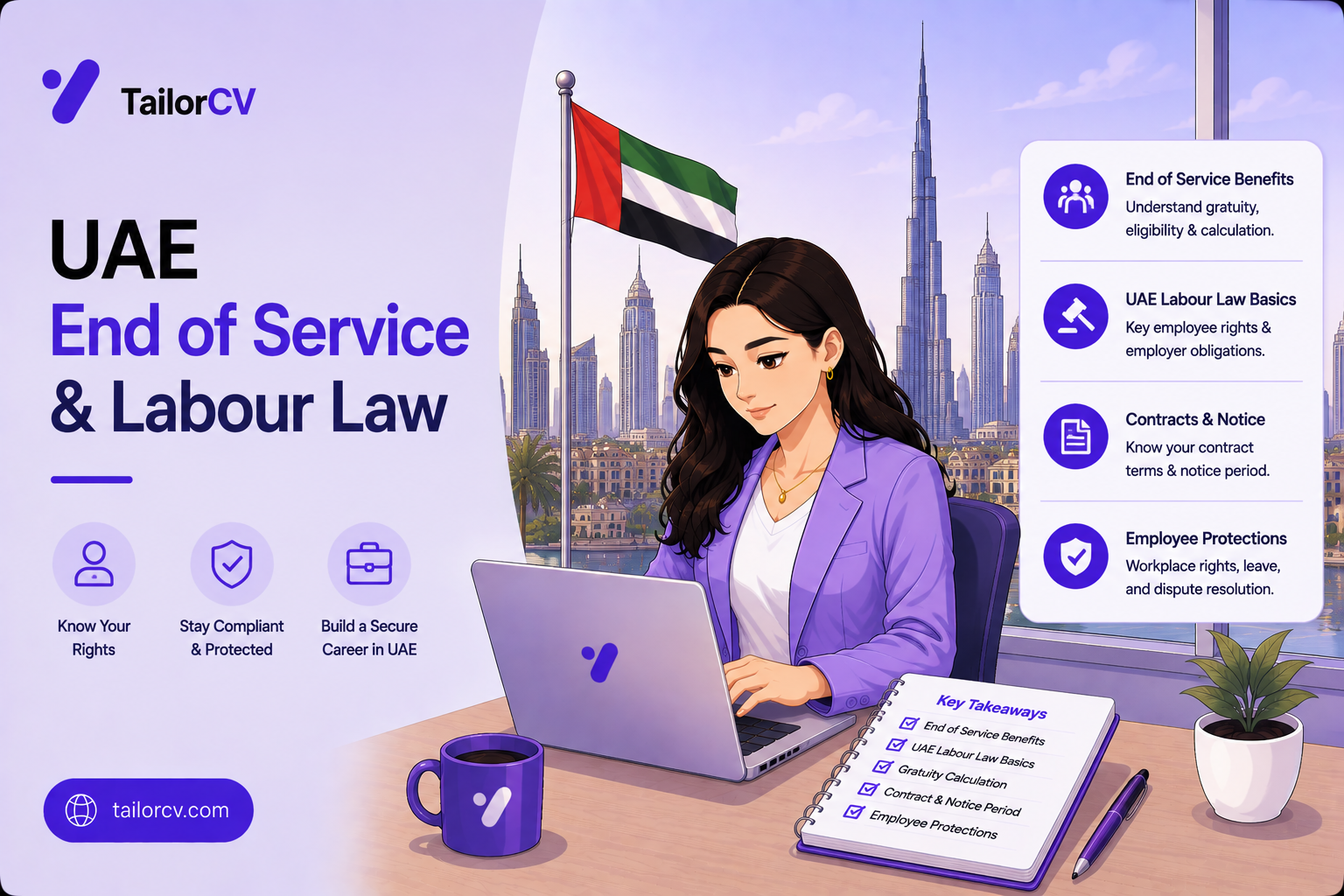
Key Takeaways
- End-of-service gratuity replaces a pension for most expatriate private-sector employees and accrues with length of service.
- It is calculated on basic salary, not the total package, which is why the basic-to-allowance split in your contract matters so much.
- A minimum service period applies before entitlement arises, and the accrual rate increases after a further threshold.
- Free zones may operate different regimes, particularly DIFC and ADGM which have their own employment laws.
- Unused annual leave, notice and repatriation are separate entitlements from gratuity.
How gratuity works
The mechanism.
Gratuity is a lump sum paid on termination of employment for expatriate employees in the private sector, in place of an ongoing pension.
Entitlement begins after a minimum period of continuous service, below which no gratuity is payable.
The accrual rate is based on basic salary per year of service, and it increases after a further service threshold is reached.
Partial years count proportionally once you are past the minimum qualifying period.
Resignation and termination have been treated differently under previous law, and the current federal framework changed several of these provisions — which is exactly why checking the current rules rather than older summaries matters.
Unpaid leave periods are generally excluded from the service calculation.
There is a cap expressed as a maximum number of years of pay.
And UAE nationals are covered by pension schemes rather than gratuity, which is a different system entirely.
Why the basic salary split decides everything
The single most consequential contract detail.
Your package is typically split between basic salary and allowances for housing, transport and other items.
Gratuity is calculated on basic salary alone, excluding all allowances.
Which means two identical total packages can produce very different gratuity payments depending purely on how they are structured.
A package weighted heavily toward allowances looks the same monthly and is worth substantially less on departure.
Employers structure this deliberately in many cases, and it is a legitimate point to raise in negotiation.
Ask for the basic salary figure explicitly when receiving an offer, and compare offers on that basis alongside the total.
And over a long tenure the difference compounds into a genuinely large sum, which is why this is worth the awkwardness of asking.
Contract types and termination
The framework around your employment.
Fixed-term contracts are the standard form under the current federal law, with defined durations and renewal provisions.
Notice periods are set within legal limits and apply in both directions, and payment in lieu is common.
Termination for cause is defined narrowly by law, and dismissal outside those grounds carries compensation obligations.
Arbitrary dismissal provisions protect employees terminated for illegitimate reasons.
Probation periods have their own notice rules, including specific provisions where an employee leaves during probation to join another UAE employer.
Non-compete clauses are enforceable within limits on duration, geography and scope, and overly broad clauses are frequently unenforceable.
Labour bans as historically understood have largely been replaced by more flexible mobility provisions, though contractual and procedural obligations remain.
And disputes go through MOHRE — the labour ministry — with a defined process before escalation to the courts, which is free to access and genuinely used.
Leave, hours and other entitlements
The rest of the statutory picture.
Annual leave accrues at a statutory minimum with many employers offering more, and untaken leave is generally paid on termination.
Public holidays are set annually and include both fixed and lunar-calendar dates.
Sick leave is provided in tiers, with full pay, partial pay and unpaid periods depending on duration.
Maternity leave is provided by statute with employer enhancements varying widely, and parental leave for both parents was introduced.
Working hours are capped, with overtime provisions and reduced hours during Ramadan.
Part-time, temporary and flexible work models were formally recognised in the reformed law, which widened the legitimate ways of working considerably.
Repatriation — a flight home on termination — is a common contractual entitlement.
And wage protection operates through a system requiring salaries to be paid through monitored channels, which gives real protection against non-payment.
Free zones and separate regimes
Where the rules genuinely differ.
DIFC — the Dubai International Financial Centre — operates under its own common-law framework with its own employment law and courts.
ADGM — Abu Dhabi Global Market — does the same, also on a common-law basis.
Both have their own end-of-service provisions, and DIFC in particular moved to a funded workplace savings scheme replacing the traditional gratuity for many employees.
Other free zones generally apply federal labour law with their own visa and licensing administration.
Which means the first question about any UAE offer is which regime governs it, because the answer determines your rights on termination, your dispute route and how your end-of-service benefit accrues.
Ask explicitly whether the employing entity is mainland, DIFC, ADGM or another free zone, and do not assume the office location answers it.
Practical steps when leaving
The sequence, which has real deadlines.
Give notice in writing in the form your contract requires.
Calculate what you are owed — gratuity on basic salary, accrued leave, any outstanding expenses and repatriation.
Confirm the figure with HR in writing before your last day rather than after.
Visa cancellation is processed by your employer and starts a grace period during which you must either transfer sponsorship or leave.
Close or transfer accounts carefully. Outstanding loans and credit facilities are taken seriously and can prevent departure.
Cancel utilities, tenancy and school registrations with the notice each requires.
Obtain your experience certificate, which employers are obliged to provide and which future employers ask for.
And keep copies of everything — contract, payslips, cancellation papers and final settlement — because reconstructing them from abroad is difficult.
Where to verify
Rules changed substantially with the reformed federal law, so check the sources.
MOHRE — the Ministry of Human Resources and Emiratisation — for federal labour law, contracts and the dispute process.
ICP for visa and residence procedures.
DIFC Employment Law and ADGM Employment Regulations for those jurisdictions specifically.
Your free zone authority for visa administration and any zone-specific provisions.
And a UAE employment lawyer for anything contested, since the dispute process is accessible and professional advice early is far cheaper than a prolonged disagreement.
Four things people get wrong
Misreadings that cost real money.
"Gratuity is based on my salary." On your basic salary only, which in a heavily allowance-weighted package can be a fraction of what you actually earn.
"I will sort out the numbers when I leave." Discrepancies are far easier to resolve while you are still employed and still have leverage.
"Federal law covers me." Not if you are employed by a DIFC or ADGM entity, where separate frameworks apply.
"Gratuity will fund my retirement." It is a service-linked lump sum, capped in years, and it is not a pension by any reasonable measure.
Wage protection and getting paid
The system that protects you.
The Wage Protection System requires salaries to be paid through monitored banking channels, with employers penalised for late or non-payment.
Which gives genuine recourse if payment stops, and complaints through MOHRE are taken seriously.
Salary must be paid within a defined period after it falls due.
Deductions are restricted to defined categories, and arbitrary deductions are unlawful.
Withholding a passport is unlawful, regardless of any arrangement an employer suggests.
And the dispute process is free to initiate through MOHRE, which is the appropriate first step before any legal action.
Mini checklist
- unchecked: Basic salary figure confirmed separately from allowances
- unchecked: Gratuity accrual understood for your service length
- unchecked: Contract type and duration checked
- unchecked: Notice period confirmed in both directions
- unchecked: Annual leave accrual and payout terms understood
- unchecked: Mainland versus free zone regime established
- unchecked: Repatriation ticket entitlement confirmed
- unchecked: Non-compete and restriction clauses read
- unchecked: Visa cancellation process understood
Scenarios
Scenario 1: You are negotiating a new offer
Ask for the basic salary component explicitly and negotiate it upward even at the same total package. It costs the employer nothing monthly and materially increases what you leave with.
Scenario 2: You are resigning after several years
Calculate your expected gratuity yourself before the conversation, including accrued leave. Discrepancies are common and easier to raise before you have signed anything on departure.
Scenario 3: You work in DIFC or ADGM
Your employment sits under that free zone's own law rather than the federal framework. Check the specific provisions, since they differ in meaningful ways including on end-of-service arrangements.
Tip: When you receive a UAE offer, ask one specific question: what is the basic salary, separate from allowances? Gratuity is calculated on that figure alone, and two offers with identical totals can differ by a very large amount on the day you leave.
Do's and Don'ts
Do
- Confirm the basic salary component explicitly
- Negotiate basic upward within the same package
- Check whether you are mainland or free zone
- Calculate your own gratuity before resigning
- Read restriction and non-compete clauses
- Keep copies of every contract and amendment
Don't
- Compare offers on total package alone
- Assume federal law applies in every free zone
- Overlook accrued leave on departure
- Ignore the visa cancellation timeline
- Rely on pre-reform descriptions of gratuity
- Treat gratuity as a retirement plan
Common Mistakes
- Comparing total packages only. The basic split changes your gratuity enormously.
- Assuming one legal regime. DIFC and ADGM differ from mainland law.
- Using outdated rules. The federal framework was substantially reformed.
- Forgetting accrued leave. It is a separate entitlement from gratuity.
- Treating gratuity as a pension. It is not sufficient for retirement on its own.
- Missing restriction clauses. Non-competes can affect your next move.
Related Guides
Keep building on this with the related guides in this series:
- Jobs in the UAE for Graduates
- Tax-Free Salary in the UAE Explained
- Jobs in the UAE for Graduates
- Jobs in Abu Dhabi
- The UAE Golden Visa Explained
You can also check your resume's ATS score for free, generate a tailored cover letter, or build a portfolio website in minutes.
Frequently Asked Questions
What is end-of-service gratuity?
A lump sum paid on termination of employment to expatriate private-sector employees, accruing with length of service and replacing an ongoing pension.
Is gratuity calculated on my whole salary?
No, on basic salary alone, excluding housing, transport and other allowances. This is why the basic-to-allowance split in your contract matters so much.
Do I get gratuity if I resign?
Entitlement rules for resignation versus termination have changed under the current federal framework, so check the present rules rather than older summaries.
Are free zones different?
Yes in several cases. DIFC and ADGM operate under their own employment laws with their own courts, and end-of-service arrangements can differ from federal provisions.
What else am I owed when leaving?
Accrued unused annual leave, payment in lieu of notice where applicable, and a repatriation ticket in many contracts — all separate entitlements from gratuity.
Is gratuity enough to retire on?
No. It is a service-linked lump sum rather than a pension, and expatriate employees in the UAE need to save independently for retirement.
What are UAE contract and termination rules?
Fixed-term contracts are standard, notice applies in both directions, termination for cause is narrowly defined, arbitrary dismissal carries compensation, and non-competes are enforceable only within limits.
What leave am I entitled to in the UAE?
Statutory annual leave with many employers offering more, public holidays including lunar-calendar dates, tiered sick leave, maternity and parental leave, and reduced working hours during Ramadan.
Which UAE employment regime applies to me?
Ask whether your employing entity is mainland, DIFC, ADGM or another free zone. DIFC and ADGM have their own common-law employment frameworks and courts, and DIFC uses a funded savings scheme rather than traditional gratuity.
What should I do when leaving a UAE job?
Give written notice, calculate gratuity and accrued leave yourself, confirm the figure with HR in writing before your last day, settle loans and accounts, and obtain your experience certificate.
What is the most common gratuity mistake?
Assuming it is calculated on total salary. It is based on basic salary alone, so a package weighted heavily toward allowances produces a much smaller payment than the headline figure suggests.
What protects me from not being paid in the UAE?
The Wage Protection System requires salaries to be paid through monitored banking channels with penalties for late payment, and MOHRE provides a free dispute process. Withholding a passport is unlawful.
What is your resume scoring right now?
Scan it against a job description and get your ATS match score in about a minute.
Drop your resume here or choose a file
PDF only. Max 2 MB.
We never share your data or use it to train AI models.

Was this guide useful?
Be the first to rate it.