 TD
TD

Key Takeaways
- Civil Service recruitment scores against Success Profiles, and Behaviours are the element most applications are won and lost on.
- Each Behaviour has a published framework describing what good looks like at each grade — read it before writing.
- Statements are scored individually, so a generic application fails even when the candidate is strong.
- Grades run from AA up to Senior Civil Service, and pay is banded rather than negotiated.
- The process is slower than private sector and requires security clearance for many roles.
Civil Service recruitment is one of the most transparent hiring processes in the UK. The framework is published, the scoring criteria are named, and the guidance describing what a good answer looks like is freely available before you apply.
Applicants still fail constantly, because they write a general application rather than answering the specific framework. It rewards people who read the instructions.
This guide covers Success Profiles, Behaviours, grades, and the process.
If you also need a CV elsewhere, check it parses — the free ATS score checker.
Success Profiles
The framework replaced competency-only recruitment. It assesses across five elements, and each vacancy states which it will use:
Behaviours. Actions and activities that result in effective performance. There are nine, and each advert names which ones apply. This is where most applications are decided.
Strengths. Things you do well and enjoy — assessed at interview, not usually in the written application.
Ability. Aptitude tests, particularly at volume-recruited grades.
Experience. Knowledge and achievements from your career.
Technical. Professional or specialist skills for specialist roles.
The advert tells you exactly which elements are assessed and, usually, which Behaviours. That is your marking scheme.
The nine Behaviours
- Seeing the Big Picture
- Changing and Improving
- Making Effective Decisions
- Leadership
- Communicating and Influencing
- Working Together
- Developing Self and Others
- Managing a Quality Service
- Delivering at Pace
Each has a published framework describing effective and ineffective behaviour at each grade level. This is the single most useful document in the whole process, and most applicants never open it.
Read the description for the grade you are applying to. "Making Effective Decisions" means something different at Executive Officer than at Grade 7 — the framework spells out what. Writing a strong answer pitched at the wrong grade scores poorly.
Writing a Behaviour statement
You will typically be asked for a statement per Behaviour, often 250 words each.
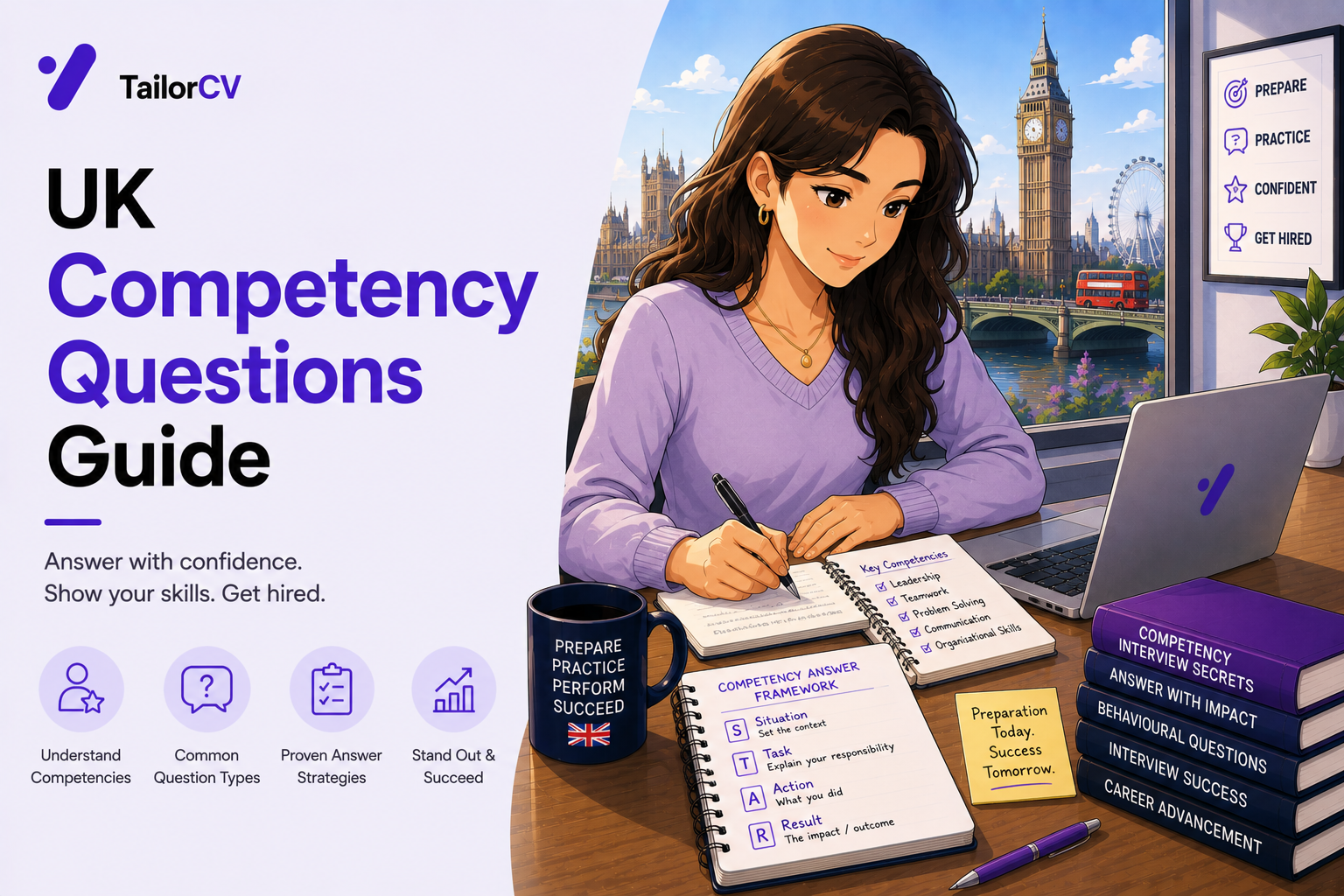
Use STAR, weighted toward Action:
- Situation — one or two sentences of context
- Task — what you needed to achieve
- Action — what you did, and why. This is most of the answer.
- Result — the outcome, quantified
Rules that decide the score:
One example per Behaviour, told properly. Three shallow examples score worse than one developed one.
Say "I", not "we". The assessor is scoring you individually. This is the most common reason capable applicants score low — the same problem covered in UK interview tips.
Mirror the framework's language. If it references "identifying the impact of decisions on stakeholders", use that framing where it genuinely applies.
Explain your reasoning, not just your actions. Behaviours assess judgement — why you chose that approach over alternatives is frequently the highest-scoring content.
Use the full word count. An answer at half the limit reads as insufficient evidence.
Do not reuse one example across Behaviours. Assessors notice, and it signals a thin career rather than a broad one.
The grades
- AA / AO — Administrative Assistant and Officer, entry level
- EO — Executive Officer, junior professional and first-line supervisory
- HEO — Higher Executive Officer, professional and team leading
- SEO — Senior Executive Officer, senior professional and management
- Grade 7 — significant policy or specialist responsibility
- Grade 6 — senior specialist and management
- SCS — Senior Civil Service, director level and above
Departments use different job titles over the same grade structure, so the grade is what tells you the level.
Pay is banded, varies by department and location, and is not negotiated as it would be in the private sector. The pension is a substantial part of total reward and is frequently undervalued in comparisons.
The process
- Find the vacancy on Civil Service Jobs. Commercial boards carry almost none of it — see the best job sites in the UK.
- Apply — personal statement and/or Behaviour statements, sometimes a CV.
- Sift — statements scored against the framework, often anonymised so assessors do not see your name or education.
- Tests at some grades — verbal, numerical, and Civil Service Judgement Test.
- Interview — panel, structured, mixing Behaviour and Strength questions.
- Merit list — successful candidates are ranked, and offers flow down the list as posts become available.
- Pre-employment checks — references, and security clearance.
Security clearance ranges from Baseline Personnel Security Standard up to Developed Vetting for sensitive roles, and higher levels take months. Many roles require UK residency for a defined period beforehand.
The merit list is worth understanding. Passing without an immediate offer can still lead to a post later, so being told you were successful but not appointed is not a rejection.
Common Mistakes
Not reading the Behaviour framework. It is published, it describes what good looks like at each grade, and most applicants never open it before writing.
Writing at the wrong grade level. "Making Effective Decisions" means something different at EO and Grade 7, and a strong answer pitched at the wrong level scores badly.
Using "we" throughout. Assessors score you individually, and collaborative phrasing makes your own contribution impossible to identify.
Giving three shallow examples per Behaviour. One developed example with reasoning scores considerably better than several thin ones.
Describing actions without explaining reasoning. Behaviours assess judgement, so why you chose an approach is often worth more than what you did.
Submitting well under the word count. It reads as insufficient evidence rather than as concision.
Reusing the same example across Behaviours. Assessors notice, and it suggests a narrow career.
Assuming a merit list place is a rejection. Successful-but-not-appointed candidates are frequently offered posts later as vacancies arise.
Frequently Asked Questions
What are Success Profiles?
The Civil Service recruitment framework, assessing across Behaviours, Strengths, Ability, Experience and Technical elements. Each advert states which apply to that role.
What are Behaviours?
Nine named behaviours with published frameworks describing effective performance at each grade. Adverts specify which are assessed, and written statements against them decide most sifts.
How long should a Behaviour statement be?
Usually up to 250 words per Behaviour. Use close to the full allowance — significantly shorter answers read as thin evidence.
Can I negotiate Civil Service pay?
Not in the private-sector sense. Pay is banded by grade and department. The pension is a substantial part of total reward and worth counting.
Do I need security clearance?
Many roles require at least Baseline Personnel Security Standard, and sensitive roles require higher levels that take months and often a UK residency history.
What is a merit list?
A ranked list of successful candidates. Being placed on it without an immediate offer means you may still be appointed later as posts become available.
Are Civil Service jobs on normal job boards?
Rarely. Civil Service Jobs is the route, and departments recruit through it almost exclusively.
Need a CV for other applications? Check your ATS score free.
Make This Practical
Open the published Behaviour framework for your grade before writing a single word. It describes exactly what effective performance looks like at that level, and pitching your answers to it is the difference between a strong application and a rejected one.
Then write one developed example per Behaviour in STAR form, weighted toward Action, using "I" throughout and explaining why you chose your approach — judgement is what Behaviours actually assess. Use close to the full word count and never reuse an example across Behaviours.
Finally, plan for the process rather than the application alone. Search Civil Service Jobs directly, budget months if the role requires higher security clearance, and treat a merit list placement as a live outcome rather than a rejection.
What is your resume scoring right now?
Scan it against a job description and get your ATS match score in about a minute.
Drop your resume here or choose a file
PDF only. Max 2 MB.
We never share your data or use it to train AI models.

Was this guide useful?
Be the first to rate it.