 TD
TD
Key Takeaways
- Legal, HR and marketing language routinely gets copy-pasted into requisitions and is not written by the hiring manager evaluating candidates.
- Certain phrases recur across nearly every posting in a category regardless of the actual role — that repetition is itself a tell.
- The real requirements are usually the specific, technical, or numerically bounded ones; the filler is usually broad and aspirational.
- Chasing every keyword equally wastes tailoring time on words that carry little weight in the actual decision.
- This is different from ignoring genuine requirements — the skill is telling the two apart, not dismissing the whole list.
Job postings contain a mix of language written by the hiring manager describing the actual role, and language inserted by HR, legal, or copied from a template. Both look identical on the page. Learning to tell them apart saves real tailoring time.
Why This Happens
Job postings pass through more hands than people expect before publication. A hiring manager writes a rough draft; HR adds standard boilerplate for compliance and consistency; a template contributes generic phrases nobody reviews closely; sometimes a posting is copied wholesale from a similar prior role and only partially updated.
The result is a document where genuine, specific requirements sit alongside filler that exists for reasons unrelated to what the job actually needs.
The Phrases That Are Usually Filler
"Fast-paced, dynamic environment." Appears in nearly every posting across every industry. Tells you nothing specific about this particular role.
"Wear many hats" / "no task too small." Common at smaller companies, signals broad scope in the abstract but rarely maps to a specific, checkable requirement.
"Passionate about [industry]." Unfalsifiable and unverifiable — nobody screens this in, and few candidates would self-report lacking it.
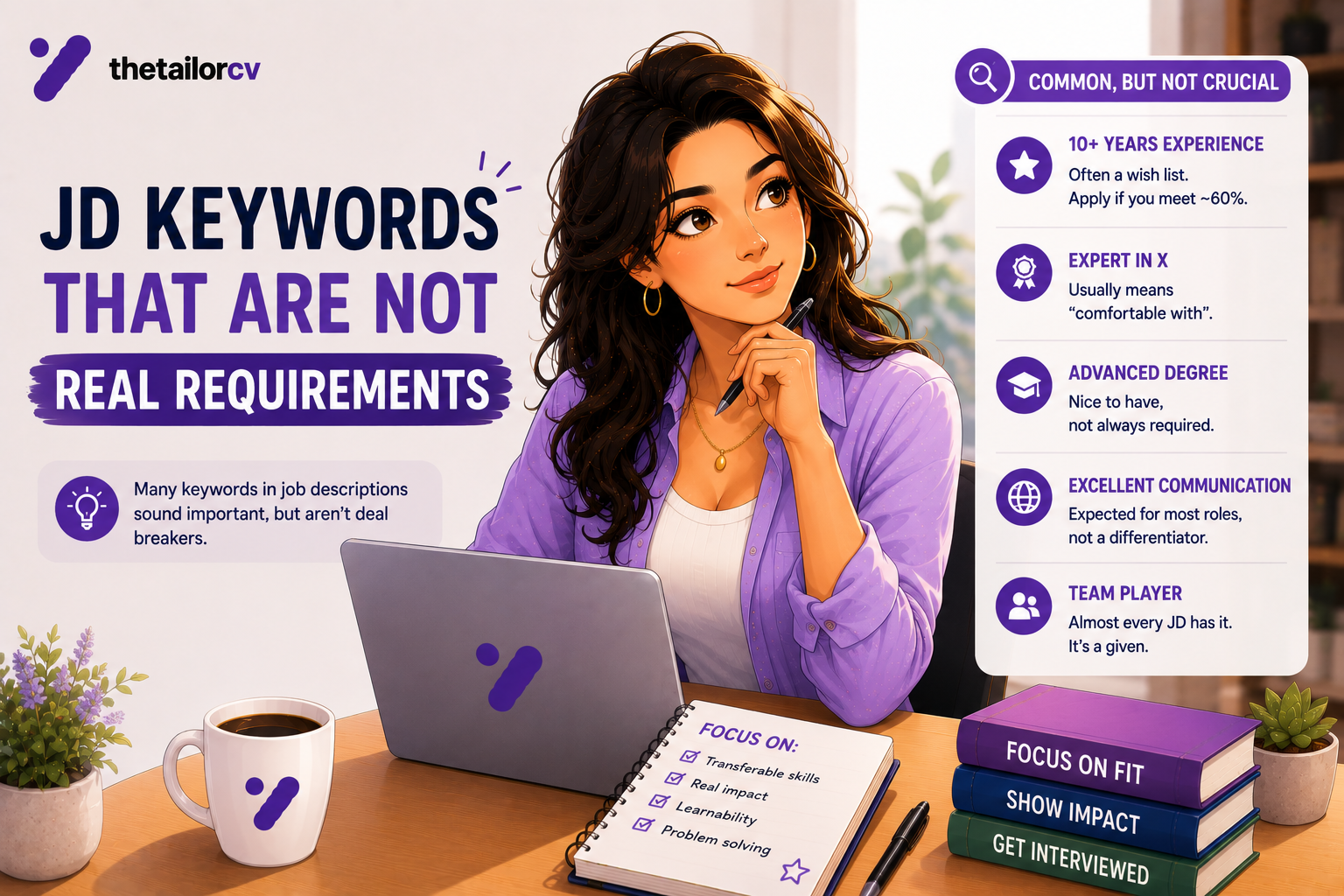
"Excellent communication skills," "strong interpersonal skills," "team player." Universal claims that every posting includes regardless of role, and every candidate claims regardless of truth. See soft skills nobody can verify for why these carry little weight either way.
"Must be able to work independently and as part of a team." Simultaneously requiring both traits is a tell that this is boilerplate rather than a specific assessment of the role's actual working style.
Equal Employment Opportunity language, benefits summaries, and legal disclaimers. Genuinely important as information, but not requirements to address in your resume — these exist for compliance reasons, not candidate screening.
"Other duties as assigned." A legal catch-all, not a real task to prepare for or mention.
The Phrases That Are Usually Real
A specific tool or platform named exactly. "Salesforce," "SAP," "Tableau," "AWS" — these are concrete, checkable, and almost always reflect what the hiring manager actually needs day one.
A specific years-of-experience number. Even if somewhat negotiable in practice — see required vs preferred qualifications — a stated number reflects a real seniority expectation someone deliberately set.
A named credential, licence, or certification. These exist for genuine, often regulatory reasons and are rarely filler.
Specific responsibilities described in a "day in the life" style section. "You will build and maintain the weekly reporting pipeline" is a real task description, distinct from a generic bullet list.
Team size, reporting structure, or specific stakeholder groups mentioned. "Report to the VP of Marketing, managing two direct reports" is specific enough that it was almost certainly written deliberately, not copied.
The Repetition Test
A fast way to sanity-check a suspicious phrase: search for it across a few other postings in the same category. If "fast-paced environment" appears in the marketing manager posting you are looking at, and also in the accountant posting from an unrelated company, and also in the warehouse supervisor posting from a third — that phrase is boilerplate, not a genuine signal about any one of those specific roles.
Specific, real requirements tend not to repeat this way, because they are tied to the actual role rather than a template.
Where This Gets Tricky: Soft Skills Named as Requirements
Some postings do genuinely mean it when they list "strong communication skills" — client-facing roles, people management, teaching. The distinction is not the phrase itself but whether the role's actual function depends on it.
A generic listing of "excellent communication skills" on an individual-contributor data analyst posting is likely filler. The same phrase on a customer success manager posting, where client relationships are the core function, likely reflects a genuine expectation — worth addressing, though still better shown through evidence than claimed directly. See soft skills nobody can verify for how to evidence rather than assert these when they matter.
What This Means for Tailoring
Do not spend equal time addressing every line in a posting. Sort quickly:
Chase these: named tools, specific years, credentials, specific described responsibilities, team/reporting structure details.
Skip these: generic environment descriptions, universal soft-skill claims, legal boilerplate, "other duties as assigned."
This sorting is the difference between tailoring that targets what actually matters and tailoring that pads a resume with language addressing filler nobody is actually screening on. See which missing skills actually matter for the same triage applied to your scan results specifically.
A Worked Example
"We're looking for a passionate, detail-oriented Financial Analyst to join our dynamic, fast-paced team. You'll work independently and collaboratively to support month-end close. 3+ years of experience with Excel and SAP required. Must have excellent communication skills. Other duties as assigned."
Sorted:
- Filler: "passionate," "dynamic, fast-paced," "independently and collaboratively," "excellent communication skills," "other duties as assigned"
- Real: "3+ years of experience," "Excel," "SAP," "support month-end close"
Out of a sentence-heavy posting, the actual actionable content is short: years of experience, two named tools, one specific responsibility. That is what deserves your tailoring time.
Oddly specific requirements often come from the last person in the role; decoding an insider JD covers which ones to ignore.
Frequently Asked Questions
Should I ignore soft-skill language entirely? Not entirely — evidence it in a bullet where genuinely true and relevant to the role's actual function, rather than listing it as a bare claim. Do not spend significant tailoring time chasing it as if it were a hard requirement.
How do I know if a specific-sounding phrase is actually boilerplate? Check whether it repeats identically across unrelated postings. Genuine, role-specific language rarely does.
Is legal and benefits language worth reading at all? Yes, as information about the job and company — just not as something to address in your resume or cover letter.
What if a posting is entirely filler with no specific content? See decoding a vague job description for how to extract what little real signal exists.
Does this affect how an ATS scores my resume? Indirectly — matching systems generally weight specific, technical terms more than generic language, which broadly aligns with this same distinction.
Focus Your Tailoring Where It Counts
The fastest way to confirm what a posting actually screens for is to see what a system extracts as its structured requirements, separate from the surrounding filler.
Scan your resume against the posting and look at the specific missing items it returns — these tend to be the concrete, technical requirements rather than the generic language padding the rest of the text.
Free, about a minute. See also required vs preferred qualifications and hidden requirements in job descriptions.
See which keywords you are missing
Scan your resume against the posting and get the exact terms it did not find.
Drop your resume here or choose a file
PDF only. Max 2 MB.
We never share your data or use it to train AI models.

Where those keywords actually go
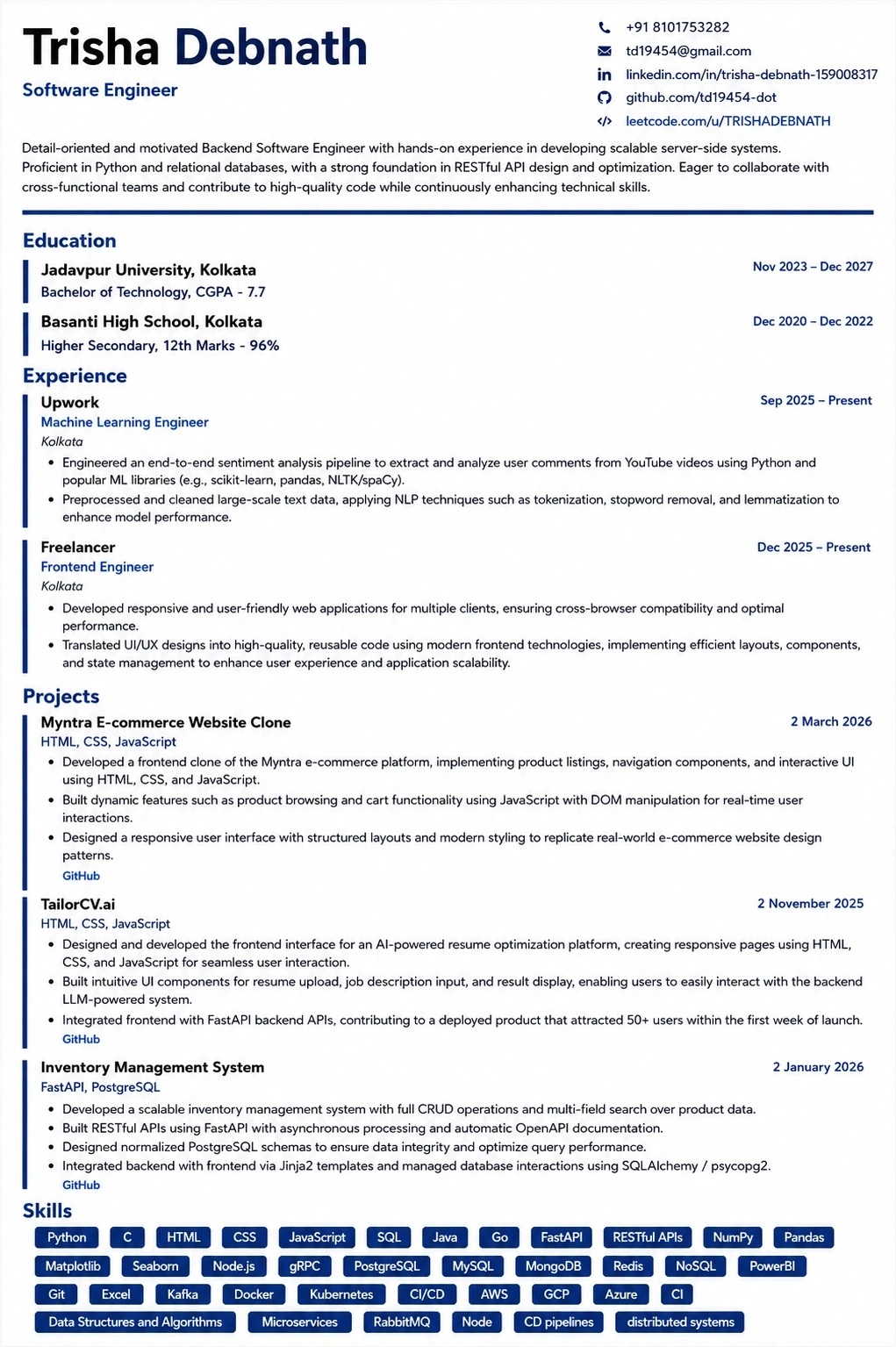
A layout with a real skills section gives the parser somewhere clean to find every term you just added.
Was this guide useful?
Be the first to rate it.