 SS
SS
Key Takeaways
- Regulation is provincial, so a licence in Ontario does not let you practise in Alberta without a transfer application.
- Licensing is usually the longest item on a newcomer's path — frequently longer than the immigration process itself.
- Start from abroad; most regulators accept applications before you arrive, and this is the single biggest time saver.
- Bridging programs exist specifically for internationally trained professionals and are widely underused.
- Many regulators offer a provisional or restricted licence that lets you work under supervision while completing requirements.
The most expensive mistake internationally trained professionals make in Canada is treating licensing as something to handle after arriving. It is routinely the longest step on the path, it can usually be started from abroad, and beginning it late can leave you qualified, landed, and unable to work in your own profession for a year.
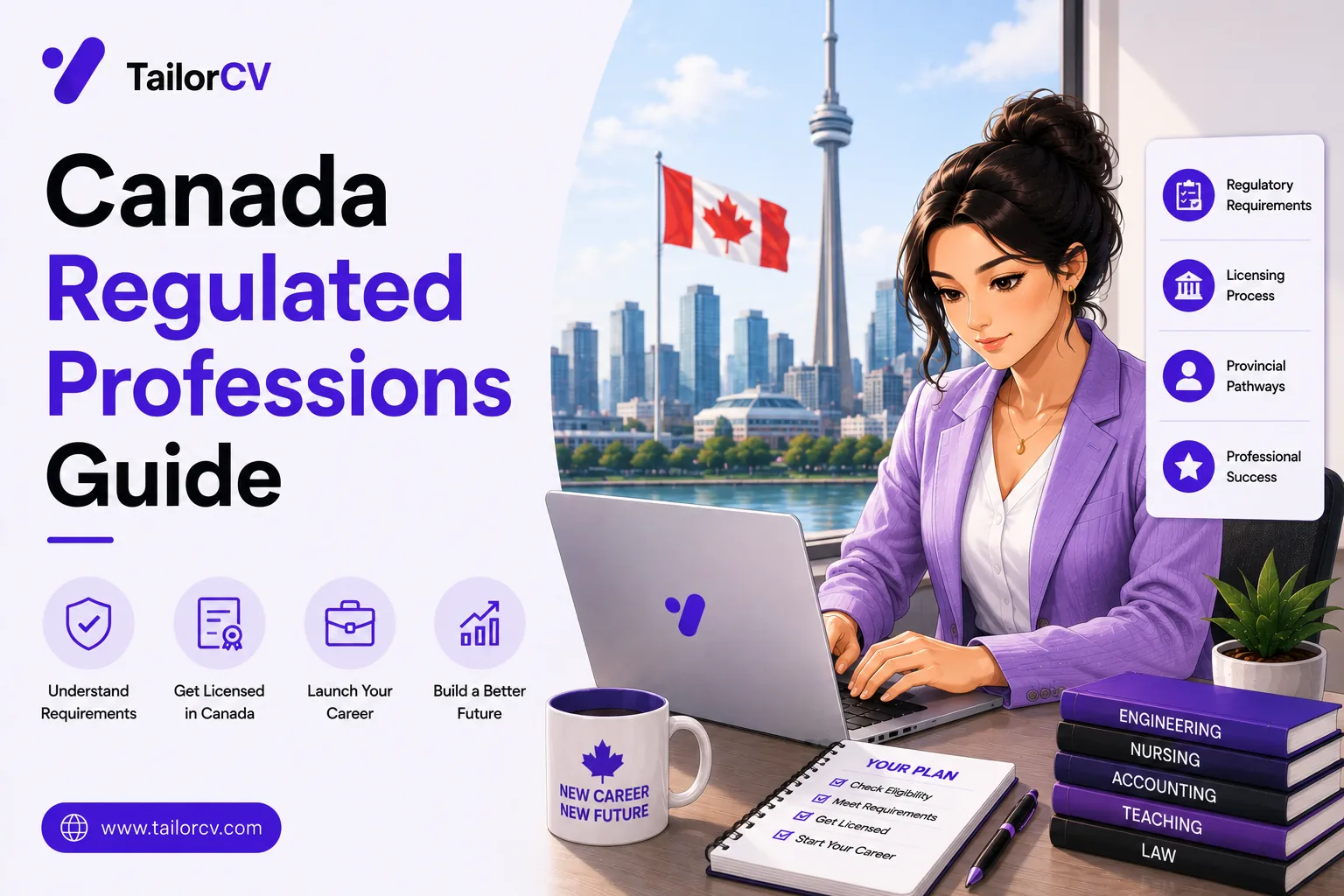
This guide covers how regulation works, the common route, and how to compress the timeline.
While it processes, get your resume Canadian-ready — the free ATS score checker.
How regulation works
Provincial, not national. Each province has its own regulator for each profession, with its own requirements, fees and processing times. A licence in one province does not automatically permit practice in another, though labour mobility provisions make transferring between provinces considerably easier than qualifying initially.
The regulator is not the employer. Hospitals, firms and school boards cannot hire you into a regulated role without the licence, however much they want to.
An ECA is not a licence. This catches people out constantly — an educational credential assessment serves immigration, not regulators, who conduct their own assessment. See the Canada credential assessment guide.
Which professions are regulated
Engineering. The P.Eng designation, issued provincially. Typically requires an accredited degree or an assessment of your foreign degree, a period of supervised Canadian engineering experience, and a professional practice examination. The Canadian experience requirement is the usual bottleneck.
Nursing. Provincial colleges, with a national registration examination and English or French language proficiency requirements.
Medicine. The longest and most restrictive path, involving examinations and, for most internationally trained physicians, competing for limited residency positions.
Teaching. Provincial certification through the relevant college or ministry — see the parallel process in the UK teaching and QTS guide for how similar systems work.
Accounting. The CPA designation, with routes for internationally qualified accountants — several foreign bodies have mutual recognition arrangements that substantially shorten the path.
Law, pharmacy, dentistry, veterinary medicine, architecture, social work and several skilled trades are similarly regulated.
Not regulated: most technology, business, marketing, finance-adjacent and administrative roles. If your profession is unregulated, none of this applies and you can simply apply for jobs.
The typical route
- Identify your provincial regulator. Start from the province you intend to settle in.
- Submit a credential assessment to the regulator, distinct from any ECA.
- Demonstrate language proficiency, frequently at a higher threshold than immigration requires.
- Sit any required examinations. Some can be taken abroad; many cannot.
- Complete supervised Canadian experience where required — the most common bottleneck.
- Receive full licensure.
Provisional and restricted licences are the important detail. Many regulators issue a limited or provisional licence allowing supervised practice while you complete the remaining requirements. This means you can be working and earning in your profession before full licensure — ask about it explicitly, because it is not always advertised prominently.
Bridging programs
Designed precisely for this situation and consistently underused.
What they are: programs at colleges and universities for internationally trained professionals, combining technical training, Canadian workplace preparation, licensing exam support and — critically — supervised work placements that can count toward the experience requirement.
Why they matter: they solve the circular problem where you need Canadian experience to be licensed and a licence to get Canadian experience.
They frequently include employer connections, which addresses the wider difficulty described in the Canadian experience problem.
Funding is often available, including provincial loans and grants for internationally trained professionals.
Find them through provincial immigrant-serving organisations and the regulators themselves — see the Canada bridging programs guide.
Working while you qualify
Waiting a year without income is not viable for most people, and there are legitimate intermediate roles.
Related unregulated positions. An internationally trained engineer can work as an engineering technologist, designer or project coordinator. A physician might work in clinical research or health administration. A nurse can work in a healthcare assistant role.
Why this works: it produces Canadian experience, an income, and a Canadian reference, all of which strengthen both the licensing application and your eventual job search.
Be careful with titles. Using a protected title — "engineer", "nurse", "accountant" in some contexts — without a licence is an offence in many provinces. Use the unprotected variant on your resume and be precise.
Say what you are doing. On your resume, state your licensing status and expected date:
P.Eng application in progress with PEO — credential assessment complete, targeting licensure Q4 2026
That converts "not licensed" into "licensed, with a date", which employers can plan around.
Common Mistakes
Starting licensing after arriving. Most regulators accept applications from abroad, and beginning early is the single largest time saving available.
Assuming an ECA satisfies the regulator. It serves immigration only; regulators conduct their own separate assessment.
Not asking about provisional licences. Many regulators allow supervised practice while requirements are completed, and it is not always advertised prominently.
Overlooking bridging programs. They exist specifically to solve the experience paradox, often include placements and funding, and most candidates never find them.
Using a protected title without a licence. It is an offence in many provinces, and precision on your resume matters.
Choosing a province without checking its requirements. Regulation is provincial and requirements differ, sometimes substantially.
Waiting for full licensure before working at all. Related unregulated roles build the Canadian experience and references the licensing process itself often requires.
Omitting licensing status from your resume. An expected date lets employers plan around you; silence gets read as not qualified.
Frequently Asked Questions
Is licensing national or provincial in Canada?
Provincial. Each province regulates separately, though labour mobility provisions make moving between provinces after licensure considerably easier than initial qualification.
Does an ECA license me to practise?
No. An ECA is for immigration points. Regulators conduct their own credential assessment as part of a separate licensing process.
Can I start licensing before I arrive?
Usually yes, and you should. Most regulators accept applications from abroad, and this is the single biggest way to compress the timeline.
What is a bridging program?
A program for internationally trained professionals combining training, licensing support and supervised work placements that can count toward experience requirements. Funding is frequently available.
Can I work while waiting for a licence?
Often, in related unregulated roles — engineering technologist, clinical research, healthcare assistant. These build Canadian experience and references. Avoid using protected titles.
How long does licensing take?
Months to years depending on the profession, and it is frequently longer than the immigration process. Medicine is the longest; some accounting routes with mutual recognition are much shorter.
What if my profession is not regulated?
Then none of this applies and you can apply for jobs directly. Most technology, business and marketing roles are unregulated.
Get the resume ready while licensing processes. Check your ATS score free.
Make This Practical
Start the licensing application from abroad, today, if your profession is regulated. Most regulators accept applications before you arrive, it is routinely longer than the immigration process, and this single decision is worth more months than anything else on your checklist.
Then ask two questions the regulator does not always volunteer: whether a provisional or restricted licence would let you practise under supervision while you complete requirements, and whether a bridging program exists for your profession — those placements frequently count toward the Canadian experience requirement that otherwise blocks you.
Finally, plan to work while you qualify. Take a related unregulated role to build Canadian experience, income and references, be precise about protected titles on your resume, and state your licensing stage with an expected date so employers can plan around you rather than screen you out.
What is your resume scoring right now?
Scan it against a job description and get your ATS match score in about a minute.
Drop your resume here or choose a file
PDF only. Max 2 MB.
We never share your data or use it to train AI models.

Was this guide useful?
Be the first to rate it.