TD
TD
Key Takeaways
- With no work history, the cover letter is where you turn potential into a story.
- Lead with genuine enthusiasm and a specific reason you want this role.
- Use projects, coursework, and transferable experiences as your evidence.
- Keep it to three short paragraphs; a wall of text hides your best points.
Why the Cover Letter Matters More With No Experience
When your resume is light on jobs, the cover letter carries more weight. It is the one place you can explain who you are, why you care, and what you have already built — context a bare resume cannot provide. Hiring managers for entry-level roles are betting on trajectory and attitude, and the letter is where those come through.
The Three-Paragraph Structure
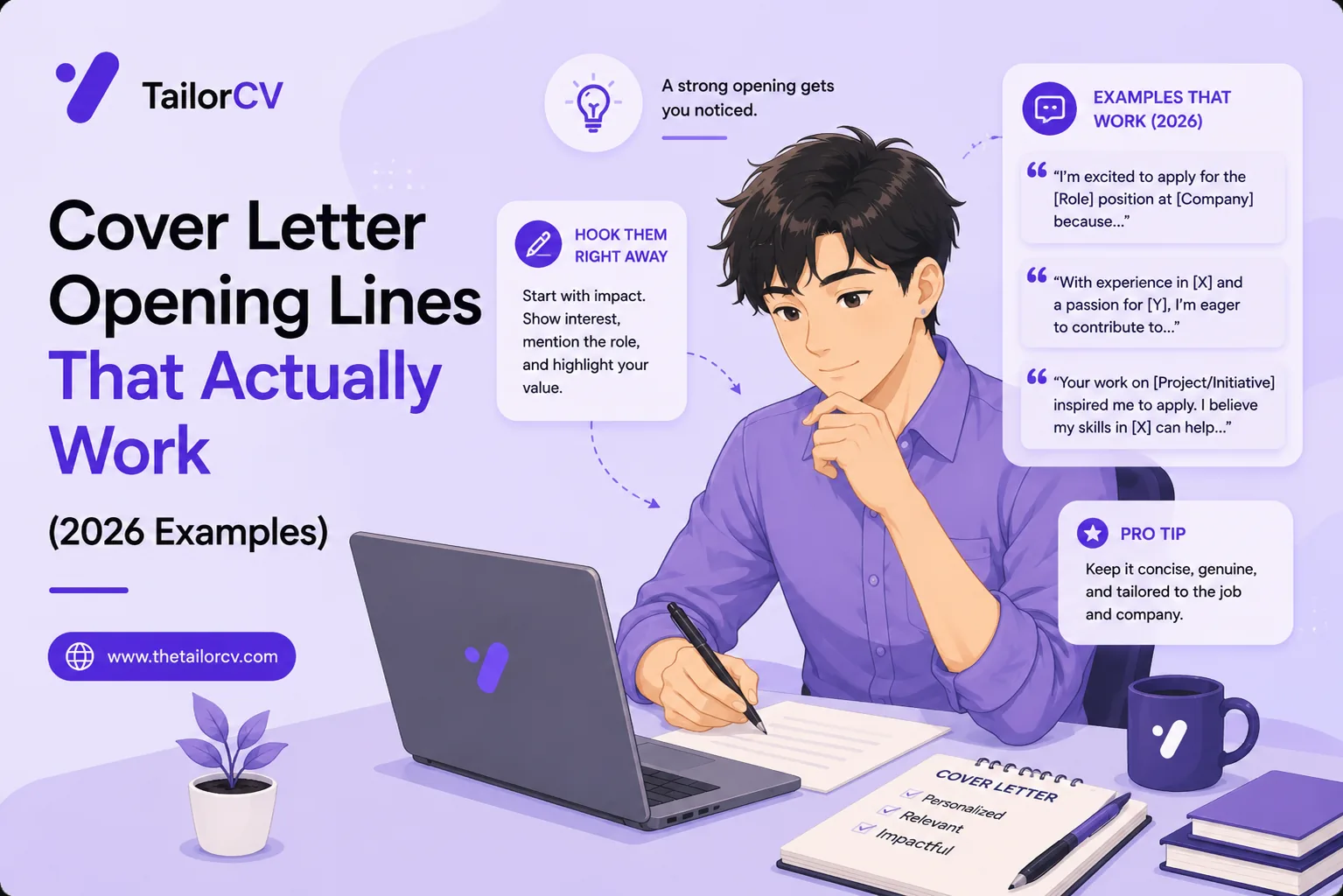
Paragraph 1 — the hook. Open with a specific reason you want this role and company, plus your strongest credential. (See our guide on cover letter opening lines.)
What the finished letter looks like
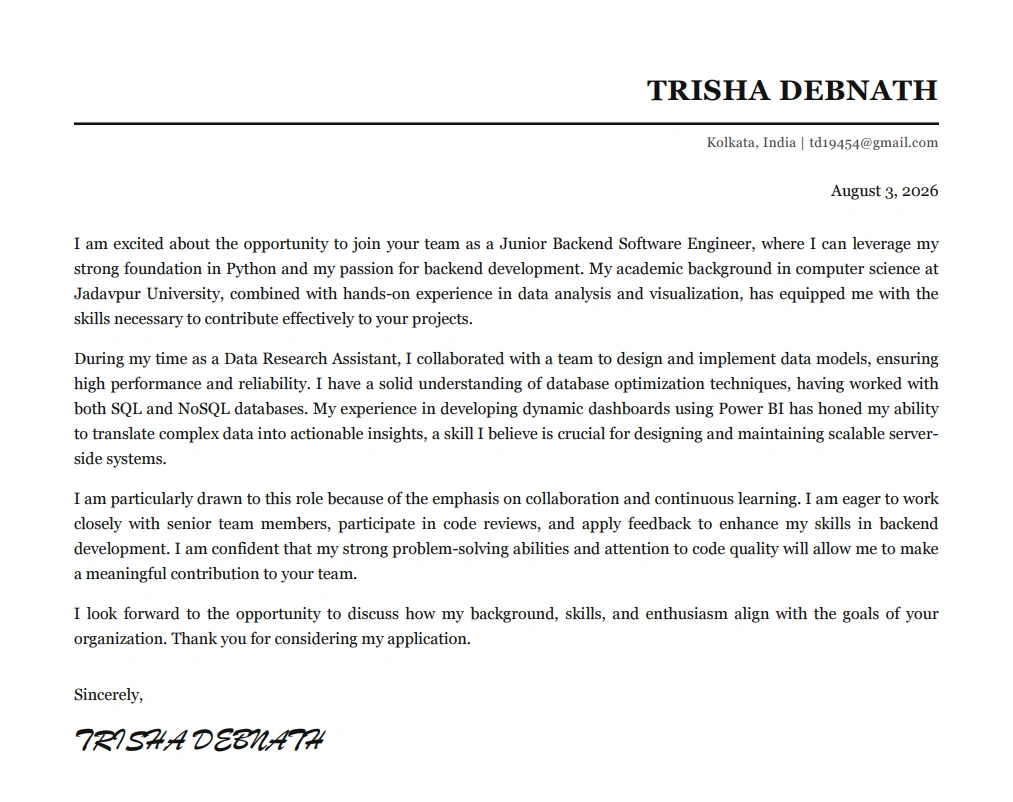
A format like this parses cleanly - one column, standard headings, everything the parser needs where it expects to find it.
Paragraph 2 — the proof. Use a project, class, or activity as evidence you can do the work. Describe what you built and the result, exactly as you would a job.
Paragraph 3 — the close. Reaffirm interest, show you understand what the role needs, and invite a conversation.
Full Template
Dear [Hiring Manager],
When I saw [Company] was hiring a [Role], it caught my attention immediately — I [specific, genuine reason tied to the company or product]. As a recent [degree/background], I have spent the last year building the exact skills the posting asks for.
For my capstone project, I [built/analyzed/designed something specific], which [result with a number if possible]. It taught me [relevant skill] and, just as importantly, that I love this kind of work. I have also [second piece of evidence — internship, club, volunteer, side project].
I know I am early in my career, but I bring genuine drive and a habit of learning fast by building. I would love the chance to contribute to [specific team goal]. Thank you for considering my application.
Sincerely, [Your Name]
Generating the letter from a job description
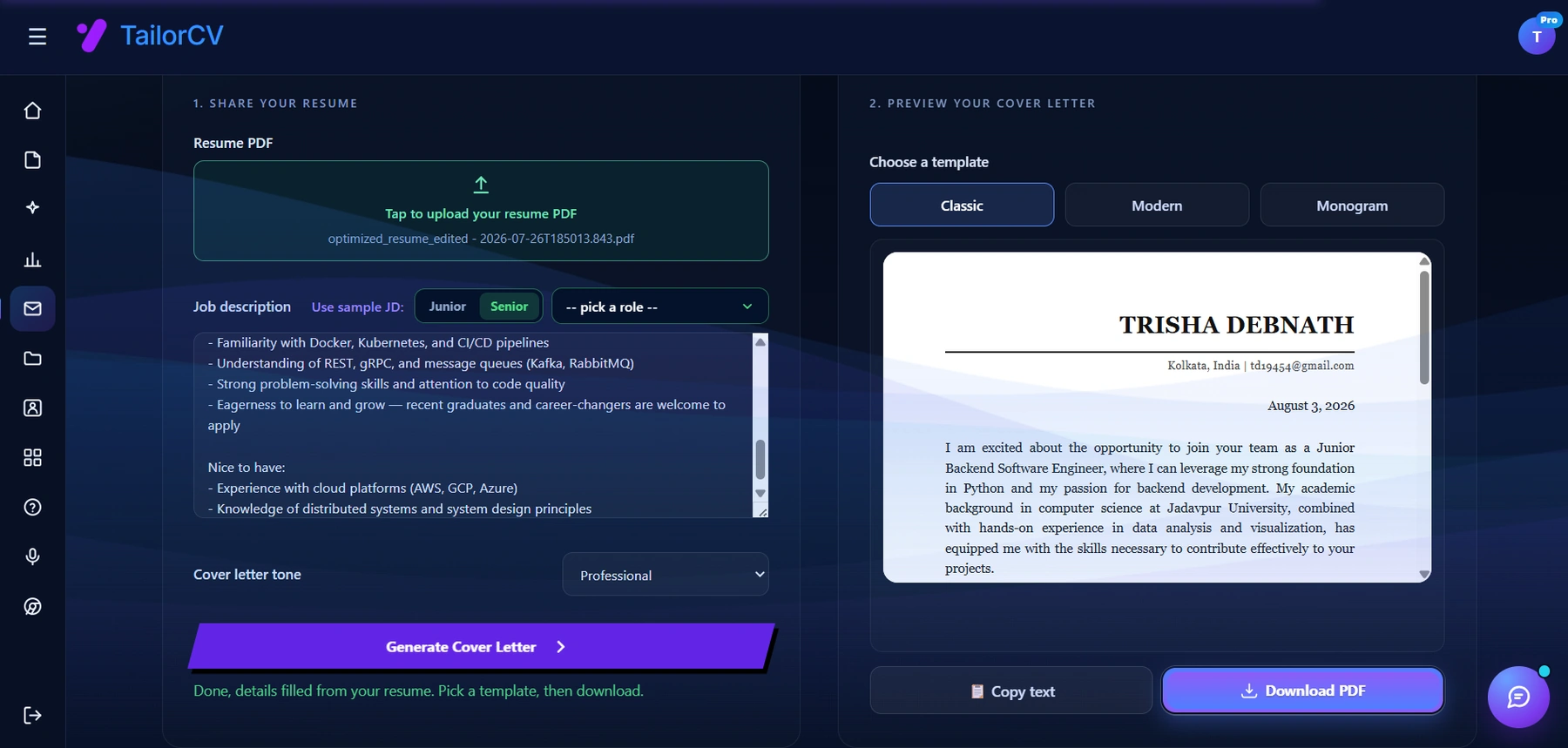
The whole flow sits on one screen - resume and job description on the left, the finished letter on the right - so you are editing rather than starting from blank.
Use Transferable Experience
Part-time jobs count. Retail teaches customer handling and composure under pressure; tutoring teaches communication; a sports team teaches discipline and collaboration. Frame these as evidence of the traits the role needs, tied to a concrete moment.
What to Write About When You Have "Nothing"
Almost every career starter has more material than they think. Any of these becomes the "proof" paragraph of your letter:
- A course project you built, especially the capstone.
- A hackathon or competition you entered, even if you did not win.
- Volunteering — an event you organized, a cause you helped.
- A club or society role — treasurer, organizer, captain.
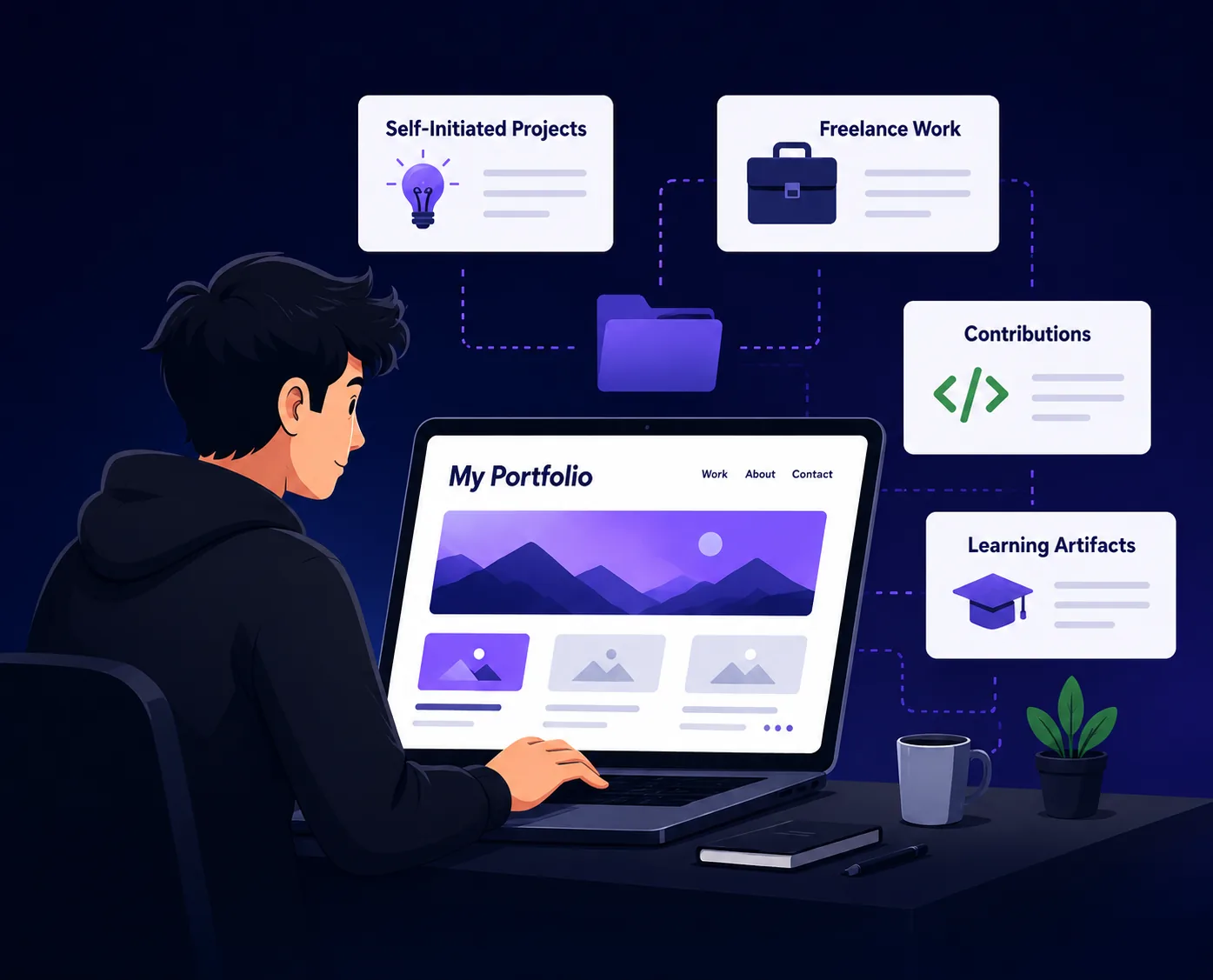
- A side project — an app, a blog, a small business, a design you made.
- A part-time job — reframed around the transferable trait it proves.
Pick the one most relevant to the role, and describe it the way you would describe real work: what you did, and what resulted. One concrete story beats three paragraphs of "I am eager and hardworking."
Turning a Trait Into a Story
The mistake beginners make is asserting traits: "I have excellent communication skills." The fix is to show them with a specific moment.
- Instead of "I'm a great team player," write: "When our group project stalled two days before the deadline, I split the remaining work into clear owners and we shipped on time."
- Instead of "I learn quickly," write: "I taught myself enough SQL over a weekend to build the reporting feature our club needed."
The specific moment proves the trait far more convincingly than the adjective, and it gives the interviewer something real to ask you about.
Common Mistakes in a No-Experience Cover Letter
- Apologizing for your inexperience. Acknowledge it once, then spend your words on what you have done.
- Repeating your resume. The letter should add a story and a voice, not restate bullets.
- Generic enthusiasm. "I'd love the opportunity to grow" says nothing. Be specific about this role and company. (See cover letter opening lines.)
- Making it too long. Half a page, three short paragraphs. Brevity keeps your best points visible.
- Focusing on what you want to get instead of what you bring. Even early-career, you bring drive, fresh skills, and a habit of learning by building.
Tailor It to Each Role
Your biggest advantage as a beginner is effort — and most beginners send the same generic letter everywhere. Change the specifics for each application: the reason you want this company, the project most relevant to this role, the skills this posting names. A tailored letter from a career starter often beats a generic one from a more experienced candidate, because it signals exactly the initiative employers are betting on.
A Complete Worked Example
Here is a full cover letter for a marketing-assistant role, written by someone with only a degree, a club role, and a part-time job — and it works because every line is specific.
Dear Ms. Okafor,
I have recommended [Company]'s newsletter to half my journalism cohort this year — it is the rare brand email people actually forward. So when I saw you were hiring a Marketing Assistant, I applied before I finished reading the posting.
I do not have a full-time marketing role yet, but I have been doing the work. As social lead for my 200-member university media society, I grew our Instagram from 400 to 2,600 followers in a semester by testing posting times and leaning into short video — the same organic-first approach your team clearly favors. I also spent two years in a customer-facing café job, where I learned to read people fast and stay calm when everything is busy at once.
What I bring is genuine drive and a habit of learning by doing. I would love to help with the content and community work your posting describes, and I am confident I would get up to speed quickly. Thank you for considering my application.
Sincerely, Amara Nwosu
Notice there is not a single marketing job on this candidate's history — yet the letter reads as capable, specific, and eager. The club result carries the proof, the café job proves composure, and the opener proves genuine interest.
Researching the Company for a Specific Hook
The difference between a forgettable letter and a memorable one is usually one specific, true detail about the company. With no experience to lean on, this specificity matters even more — it proves initiative. Spend ten minutes before you write:
- Read the company's most recent blog post, product update, or announcement.
- Try their product or service if you can, and note one honest reaction.
- Read the full job posting twice; the problems it describes are what you should speak to.
- Look at how they write on their site, and match that tone.
One real observation — "your onboarding flow is the smoothest I've used" or "your posting's emphasis on writing is exactly why I applied" — turns a generic letter into one that could only have been sent to them.
How Long It Should Take (and Why It's Worth It)
A strong entry-level cover letter takes 30 to 45 minutes: ten minutes of research, twenty of writing, and ten of ruthless cutting. That feels like a lot when you are applying to many roles, which is exactly why most beginners skip it or send a generic one — and exactly why yours stands out when you do not. For the roles you genuinely want, this is the highest-leverage 40 minutes in your entire application. You can use an AI cover letter generator to produce a first draft from the job description in seconds, but always rewrite the opener and the proof paragraph by hand — those are where the specific, only-you details live.
Frequently Asked Questions
Should I admit I have no experience?
Do not apologize for it or dwell on it. Acknowledge you are early-career once, then spend your words on what you have done and what you bring.
How long should it be?
Half a page, three short paragraphs. Brevity keeps your strongest points visible.
Can I use AI to write it?
Use it for a first draft from the job description, then rewrite the specifics in your own voice — the project, the reason you applied, the detail only you know.
Do I even need a cover letter for an entry-level job?
When you have little work history, yes — it is where you turn potential into a story a resume cannot tell. If an application makes it optional, include one anyway; it is often the tiebreaker between similar junior candidates.
Who do I address it to if there's no name?
Try to find the hiring manager or recruiter on LinkedIn first. If you genuinely cannot, "Dear Hiring Manager" is acceptable — but avoid the dated "To Whom It May Concern."
How is a cover letter different from my resume?
The resume is a structured list of skills and evidence; the cover letter is a short, first-person story that explains who you are, why you want the role, and what a project or experience taught you. Same facts, different job.
Should I mention my GPA or grades in the cover letter?
Only if they are strong and relevant, and even then a brief mention is enough — the resume is the place for grades. The letter is better spent on a specific project, your genuine interest, and what you bring beyond a number.
What if I'm applying to a field unrelated to my degree?
Lead with transferable skills and genuine motivation. Explain, briefly and positively, why you are drawn to this field, and prove capability with any relevant project, course, or self-taught skill. A career-curious candidate with a clear reason and real initiative is compelling, degree match or not.
Connecting Your Cover Letter to Your Resume
Your cover letter and resume are a matched pair, and they should tell one coherent story rather than repeat each other. The resume lists your projects, skills, and any experience in structured form; the cover letter picks the single most relevant item from that list and tells the story behind it — what you built, what you learned, why it matters for this role. If your resume shows a capstone project, your cover letter is where you bring it to life. This division of labor is especially powerful when you have little experience, because the resume can look thin on its own, while the letter adds the context, motivation, and voice that turn a short list of projects into a compelling case. Make sure the two agree — the same projects, the same skills, the same direction — so a reader moving from one to the other sees a consistent, deliberate candidate. If you are still assembling the resume itself, the resume builder gives you a clean structure to pair with the letter.
The Confidence to Apply Before You Feel Ready
The biggest obstacle for career starters is not writing ability — it is the belief that they should not apply until they have "enough" experience. That belief keeps strong candidates on the sidelines while less qualified but bolder ones get the interviews. Job postings that list "2+ years required" are usually wish lists, not hard filters, especially for junior roles, and a specific, genuine cover letter can outweigh a missing year on paper. The entire purpose of the letter, when you are early in your career, is to make the case that potential and demonstrated initiative are worth more than a longer track record — and for the right employer, they are. Apply to the roles you want, make your case with a specific story and real enthusiasm, and let the employer decide. The candidate who applies with a thoughtful letter and a genuine project beats the one who waited another year to feel ready.
Putting It All Together
With little work history, the cover letter is your most powerful document — it is where drive, fit, and a real project can outweigh a thin resume. Open with a specific reason you want the role, prove your ability with one concrete story instead of asserting traits, keep it to three tight paragraphs, and tailor it to each company. Do that and you compete not as "the candidate with no experience," but as the one who clearly wants it most and has already started building.
Was this guide useful?
Be the first to rate it.